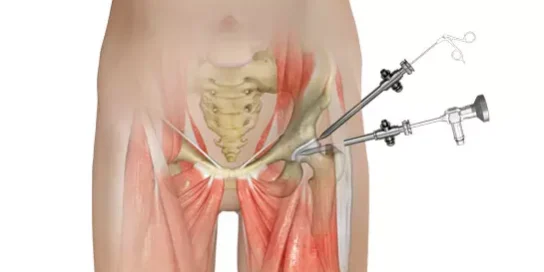
Hip Arthro, commonly known as hip arthroscopy, is a minimally invasive orthopedic procedure used to diagnose and treat conditions affecting the inside of the hip joint. Instead of making a large incision, an orthopedic surgeon inserts a tiny camera (arthroscope) and specialized surgical instruments through small incisions to repair damaged tissues with greater precision and less disruption to surrounding muscles.
Hip arthroscopy is often recommended for patients experiencing persistent hip pain caused by conditions such as labral tears, femoroacetabular impingement (FAI), cartilage damage, loose bone fragments, or hip instability—especially when conservative treatments like physical therapy, medications, and activity modification have not provided sufficient relief.
In this guide, you’ll learn what hip arthroscopy is, the conditions it treats, who is an ideal candidate, how the procedure is performed, its benefits, recovery expectations, potential risks, and when to consult an experienced orthopedic hip specialist.
What Is Hip Arthroscopy (Hip Arthro)?
Hip Arthro, or hip arthroscopy, is a minimally invasive surgical procedure that enables an orthopedic surgeon to diagnose and treat a wide range of hip joint problems using an arthroscope—a thin, flexible camera that provides a clear view of the inside of the joint.
Unlike traditional open hip surgery, hip arthroscopy requires only a few small incisions. The arthroscope transmits high-definition images to a monitor, allowing the surgeon to accurately identify and treat damaged structures while minimizing trauma to healthy muscles, ligaments, and soft tissues.
Because of its minimally invasive approach, hip arthroscopy typically results in less postoperative pain, smaller scars, reduced risk of complications, and a quicker recovery compared with conventional open surgery.
What Is Hip Arthro?
Hip Arthro refers to hip arthroscopy, a minimally invasive hip surgery that allows an orthopedic surgeon to examine and treat problems inside the hip joint using a tiny camera called an arthroscope.
Unlike traditional open hip joint surgery, hip arthroscopy requires only small incisions. The camera displays detailed images on a monitor, allowing the surgeon to perform precise repairs while minimizing damage to surrounding muscles and soft tissues.
Hip arthroscopy is commonly used to treat:
- Hip labral tears
- Femoroacetabular impingement (FAI)
- Cartilage injuries
- Loose bone or cartilage fragments
- Synovitis (inflamed joint lining)
- Hip instability
- Selected cases of early arthritis
For many patients, minimally invasive hip surgery offers pain relief, improved movement, and a faster recovery than traditional open procedures.
Common Conditions Treated with Hip Arthroscopy
Hip arthroscopy treatment can address several painful conditions affecting the hip joint.
| Condition | How Hip Arthroscopy Helps |
| Labral tears | Repairs or reconstructs damaged cartilage around the hip socket |
| Femoroacetabular impingement (FAI) | Reshapes abnormal bone to reduce joint friction |
| Loose bodies | Removes floating cartilage or bone fragments |
| Cartilage damage | Smooths or repairs damaged joint surfaces |
| Synovitis | Removes inflamed tissue causing pain and swelling |
| Hip instability | Repairs structures that improve joint stability |
| Early arthritis | May relieve symptoms in carefully selected patients |
Early diagnosis often improves treatment outcomes and may help preserve the natural hip joint.
Symptoms That May Require Hip Arthroscopy
You should consider evaluation by a hip arthroscopy specialist if you experience:
- Persistent hip or groin pain
- Pain during sports or exercise
- Clicking, locking, or catching sensations
- Reduced hip motion
- Pain when sitting for long periods
- Difficulty walking or climbing stairs
- Hip weakness
- Pain that does not improve after physical therapy
- Symptoms lasting several months despite conservative treatment
These symptoms do not always require surgery, but they warrant a thorough orthopedic evaluation.
Who Is a Good Candidate for Hip Arthroscopy?
Hip arthroscopy is not appropriate for every patient. The best candidates generally include individuals who have a treatable mechanical problem within the hip joint and have not responded to non-surgical care.
You may be a good candidate if you:
- Are physically active
- Participate in sports
- Have chronic hip pain
- Have imaging that confirms labral tears or FAI
- Have failed conservative treatment such as rest, medication, injections, or physical therapy
- Have minimal to moderate arthritis rather than advanced joint degeneration
Your orthopedic hip specialist will review your medical history, physical examination, and imaging studies before recommending surgery.
Benefits of Hip Arthroscopy
Hip arthroscopy offers several advantages compared with traditional open hip surgery.
Key benefits include:
- Smaller incisions
- Less muscle damage
- Reduced postoperative pain
- Lower risk of infection
- Minimal blood loss
- Outpatient surgery in many cases
- Faster recovery
- Earlier return to work
- Quicker return to sports for appropriate patients
- Improved hip function and mobility
Although outcomes vary, many patients experience meaningful pain relief and improved quality of life after successful arthroscopic hip surgery.
Step-by-Step Hip Arthroscopy Procedure
Understanding the hip arthroscopy procedure can help reduce anxiety before surgery.
1. Anesthesia
The procedure is performed under general anesthesia or, in selected cases, regional anesthesia.
2. Small Incisions
The surgeon makes two or three small incisions around the hip.
3. Arthroscope Insertion
A tiny camera called an arthroscope is inserted into the joint.
4. Camera Visualization
High-definition images are displayed on a monitor, allowing the surgeon to inspect the hip joint in detail.
5. Surgical Repair
Depending on the diagnosis, the surgeon may:
- Repair a labral tear
- Remove loose fragments
- Reshape bone in femoroacetabular impingement
- Repair cartilage
- Remove inflamed tissue
6. Closure
The instruments are removed, and the small incisions are closed with stitches or surgical strips.
7. Recovery Room
Patients are monitored before going home the same day in most cases.
Most hip arthroscopy surgeries take approximately 60 to 120 minutes, depending on the complexity of the repair.
Hip Arthroscopy Recovery Timeline
Recovery varies based on the condition treated and the type of repair performed.
First Week
- Mild pain and swelling are expected.
- Crutches are commonly used.
- Ice and prescribed medications help control discomfort.
- Gentle exercises usually begin.
Weeks 2–6
- Physical therapy becomes more active.
- Walking gradually improves.
- Many patients return to desk work within two to four weeks.
- Crutches are discontinued as directed by the surgeon.
Weeks 6–12
- Strength and flexibility continue to improve.
- Most patients resume routine daily activities.
- Low-impact exercise is often introduced.
Months 3–6
- Sports-specific rehabilitation progresses.
- Many athletes return to sports after clearance from their orthopedic surgeon.
- Full recovery depends on the original injury and commitment to rehabilitation.
Following the prescribed rehabilitation program is one of the most important factors in achieving a successful outcome.
Risks and Complications
Hip arthroscopy is considered a safe procedure when performed by an experienced orthopedic surgeon. However, every surgery carries some risk.
Possible complications include:
- Infection
- Blood clots
- Temporary nerve irritation
- Persistent pain
- Joint stiffness
- Bleeding
- Fluid leakage into surrounding tissues
- Rare injury to cartilage or nearby structures
Fortunately, serious complications are uncommon, especially when patients follow postoperative instructions carefully.
Your surgeon will discuss the potential benefits and risks based on your specific condition.
How to Prepare for Surgery
Proper preparation helps improve safety and recovery.
Before surgery, your care team may recommend:
- A complete medical evaluation
- X-rays or MRI scans
- Blood tests if needed
- Medication review
- Temporarily stopping certain blood-thinning medications
- Fasting after midnight before surgery
- Arranging transportation home
- Preparing your home with walking aids and frequently used items within easy reach
Following all preoperative instructions helps reduce the risk of complications.
Frequently Asked Questions
Is Hip Arthro painful?
During surgery, you will not feel pain because of anesthesia. Mild to moderate soreness afterward is expected and is usually well controlled with medication, ice, and physical therapy.
How long does hip arthroscopy surgery take?
Most procedures last between 60 and 120 minutes, depending on the complexity of the repair.
Can I walk after surgery?
Yes. Most patients begin walking with crutches shortly after surgery. Weight-bearing restrictions vary depending on the procedure performed.
How long is recovery?
Many daily activities return within six to twelve weeks, while complete recovery for sports may take three to six months.
Is hip arthroscopy worth it?
For carefully selected patients with treatable hip conditions, hip arthroscopy can significantly reduce pain and improve function.
Will I need physical therapy?
Yes. Physical therapy is an essential part of recovery and helps restore strength, flexibility, and normal movement.
What are the success rates?
Success rates are generally high for appropriately selected patients, particularly those with labral tears and femoroacetabular impingement without advanced arthritis.
When can I drive again?
Many patients can resume driving within two to six weeks once they are off narcotic pain medication and can safely control the vehicle. Always follow your surgeon’s advice.
Will I have scars?
Hip arthroscopy uses very small incisions, which typically leave minimal scars compared with open surgery.
Can hip arthroscopy prevent hip replacement?
In some patients with early joint damage, treating mechanical problems early may delay progression of joint degeneration. However, it cannot reverse advanced arthritis.
Why Choose an Experienced Hip Arthroscopy Specialist?
Successful outcomes depend on careful patient selection, accurate diagnosis, surgical expertise, and a structured rehabilitation program.
Board-certified orthopedic surgeons who specialize in minimally invasive hip surgery are trained to identify the underlying cause of hip pain and recommend the most appropriate treatment. In many cases, surgery is considered only after non-surgical options have been fully explored.
Current guidance from respected organizations such as the American Academy of Orthopaedic Surgeons (AAOS), the American Association of Hip and Knee Surgeons (AAHKS), and the National Institutes of Health (NIH) supports evidence-based decision-making and individualized treatment plans based on each patient’s condition, activity level, and overall health.
Conclusion
Hip Arthro, also known as hip arthroscopy, is an advanced minimally invasive procedure that can effectively treat many causes of chronic hip pain, including labral tears, femoroacetabular impingement, cartilage injuries, and loose bodies. Compared with traditional open surgery, it offers smaller incisions, less postoperative discomfort, faster recovery, and an earlier return to daily activities for many patients.
Not everyone with hip pain requires surgery, which is why a thorough evaluation by an experienced orthopedic hip specialist is essential. Your treatment plan should always be tailored to your symptoms, imaging findings, activity goals, and overall health.
If persistent hip pain is limiting your quality of life, schedule a consultation through hasansyedmd to discuss your diagnosis, explore your treatment options, and determine whether Hip Arthro is the right solution for you.