Heel pain rarely stays in your heel. If you’ve noticed a stabbing ache in your foot in the morning and a new twinge in your knee by the afternoon, the two may be connected. So, can plantar fasciitis cause knee pain? Yes, it can. When your heel hurts, you unconsciously change how you walk, and those altered walking mechanics can place extra stress on your knee joint over time. Many patients who see an orthopedic specialist for heel pain also mention knee discomfort, and the link often comes down to how your body compensates for pain.
What Is Plantar Fasciitis?
Plantar fasciitis is inflammation of the plantar fascia, a thick band of tissue that runs along the bottom of your foot. It connects your heel to the base of your toes and supports the arch of your foot.
When this band gets overloaded, tiny tears and inflammation develop near the heel. That’s what causes the classic sharp, stabbing heel pain.
Common causes and risk factors include:
- Repetitive impact from running or long periods of standing
- Tight calf muscles and a tight Achilles tendon
- Flat feet or high arches that change foot biomechanics
- Worn-out or unsupportive shoes
- Sudden increases in activity or mileage
- Excess body weight, which raises pressure on the arch
The main symptom is heel pain that feels worst with your first steps in the morning or after sitting for a while. Athletes, runners, and older adults are especially prone to it.
Can Plantar Fasciitis Cause Knee Pain?
Yes. Plantar fasciitis can contribute to knee pain, though it does so indirectly rather than by directly injuring the knee.
Here’s the biomechanical connection. Your foot is the foundation of your gait. When heel pain forces you to change how you walk, that change travels up your leg through what physicians call the kinetic chain, a linked system of joints and muscles.
A few things happen when you compensate for heel pain:
- Altered gait. You shift weight to the outside of the foot or the forefoot to avoid pressing on the sore heel.
- Pressure changes. Uneven loading changes how force moves through your ankle, shin, and knee joint.
- Muscle imbalance. Calf tightness and weak foot muscles pull your alignment out of balance.
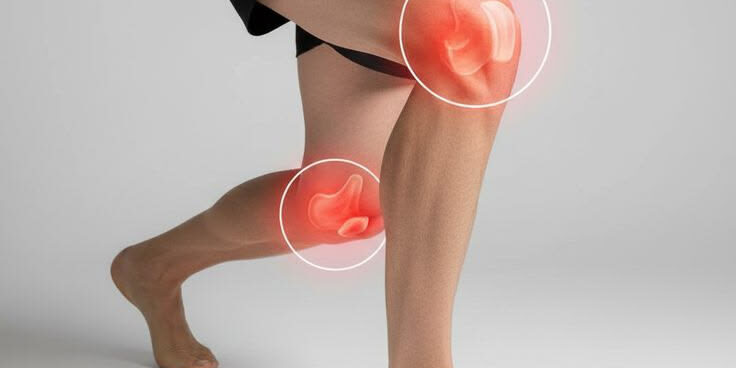
- Extra joint stress. The knee absorbs forces it wasn’t meant to handle, especially around the patella and inner knee.
Over weeks, this repeated stress can irritate the tissues around the knee and produce a dull ache or sharp pain. Every patient is different, so the degree of knee involvement varies.
Why Heel Pain Changes Your Walking Pattern
Heel pain rewires how you move, usually without you realizing it.
- Limping. You favor the painful foot and shorten your stride on that side.
- Weight shifting. You lean toward the healthy leg, overloading it.
- Reduced heel strike. Instead of landing on your heel, you land flatter or on the ball of the foot.
- Uneven pressure. Force spreads unevenly across both legs.
- Joint compensation. Your ankle, knee, and hip adjust their motion to keep you moving.
These adjustments protect your heel in the short term. Long term, they change your walking mechanics enough to strain joints higher up the chain.
Symptoms That Suggest Plantar Fasciitis May Be Affecting Your Knee
Watch for a combination of foot and knee symptoms appearing together.
- Sharp heel pain, especially with your first morning steps
- Pain that eases with movement, then returns after long walking
- Inner knee pain or pain at the front of the knee near the patella
- A noticeable limp or uneven stride
- Tight calf muscles and reduced ankle flexibility
- Stiffness or reduced mobility in the knee after activity
When heel pain and knee pain track together, and both worsen with the same activities, altered gait is a likely factor.
Other Conditions That May Cause Both Heel and Knee Pain
Not all combined heel and knee pain comes from plantar fasciitis. An orthopedic evaluation helps rule out other causes.
- Arthritis in the foot, ankle, or knee joint
- Flat feet or high arches that shift foot biomechanics
- Achilles tendonitis, which limits ankle motion and changes gait
- Patellar tendonitis, causing pain just below the kneecap
- Nerve compression, which can refer pain along the leg
- Stress fractures in the foot or lower leg from overuse
Because these conditions can overlap, self-diagnosis is unreliable. A proper exam identifies the true source.
How Is Plantar Fasciitis Diagnosed?
Diagnosis usually starts with a conversation and a hands-on exam, not imaging.
- Medical history. Your physician reviews your symptoms, activity levels, footwear, and how the pain behaves.
- Physical examination. Pressing along the heel and arch helps pinpoint the inflamed plantar fascia.
- Gait assessment. Watching you walk reveals compensation patterns affecting the knee.
- Range of motion testing. This checks ankle flexibility and calf tightness.
- Imaging when needed. X-rays rule out fractures or heel spurs, ultrasound shows fascia thickening, and MRI is reserved for unclear or stubborn cases.
Most cases are diagnosed clinically, so advanced imaging isn’t always necessary.
Treatment for Plantar Fasciitis and Related Knee Pain
Treatment focuses on calming inflammation, restoring normal walking mechanics, and taking pressure off the knee. Most patients improve with conservative care.
- Rest and activity modification. Ease off high-impact activity while the tissue heals.
- Ice. Apply to the heel to reduce inflammation.
- Stretching. Target the plantar fascia, calf muscles, and Achilles tendon.
- Physical therapy. A physical therapist guides strengthening and gait retraining.
- Orthotics and arch support. Custom or over-the-counter orthotics support the arch and improve alignment.
- Supportive footwear. Well-cushioned shoes with proper arch support reduce strain.
- Night splints. These keep the fascia gently stretched overnight.
- NSAIDs. Anti-inflammatory medication may help when appropriate and approved by your physician.
- Corticosteroid injections. Considered for persistent inflammation in select cases.
- PRP (platelet-rich plasma). An injection option that uses your own blood components to support healing.
- Shockwave therapy. Sound-wave treatment that may help chronic heel pain.
- Weight management. Reducing load lowers pressure on the foot and knee.
Your treatment plan should be personalized. What works for a marathon runner may differ from what suits an older adult.
Can Treating Plantar Fasciitis Relieve Knee Pain?
Often, yes. When you treat the heel and your walking pattern returns to normal, the compensation that stressed your knee usually eases. As gait improves, many patients notice their knee pain fades along with the heel pain.
That said, don’t assume the knee will always resolve on its own. If knee pain persists after your heel improves, it should be evaluated separately. There may be a distinct knee issue that needs its own care.
Prevention Tips
A few consistent habits protect both your feet and knees.
- Wear supportive shoes with good arch support
- Replace worn-out footwear before the cushioning breaks down
- Stretch your calves and plantar fascia daily
- Maintain a healthy weight to reduce joint load
- Increase activity and mileage gradually
- Warm up before running or sports
- Strengthen your foot and ankle muscles
Small, steady changes prevent the overload that starts the cycle.
When to See an Orthopedic Specialist
Mild heel pain often improves with home care. Certain signs mean it’s time for a professional evaluation.
- Pain that lasts more than two weeks despite rest
- Persistent or worsening heel or knee pain
- Swelling around the heel or knee joint
- Difficulty walking or a lasting limp
- Recurring symptoms that keep returning
- Night pain or severe, sharp pain
An orthopedic surgeon can confirm the diagnosis, check your gait, and build a plan that addresses both the heel and the knee.
Frequently Asked Questions
Can plantar fasciitis cause knee pain?
Yes. Heel pain changes your gait, and that altered walking pattern can place extra stress on the knee joint, leading to knee pain over time.
How does plantar fasciitis affect walking?
It makes you favor the painful heel, shorten your stride, and shift weight, which changes your normal walking mechanics.
Can heel pain change your gait?
Yes. Avoiding heel pressure reduces your heel strike and creates uneven loading, which alters your gait.
Why does altered walking cause knee pain?
When force travels unevenly up the kinetic chain, the knee absorbs stress it isn’t built for, irritating tissues around the patella and inner knee.
Can plantar fasciitis affect the hips or back?
It can. Compensation patterns don’t always stop at the knee and may contribute to hip or lower back discomfort in some people.
Can exercises and orthotics help?
Yes. Targeted stretching, foot strengthening, and orthotics with arch support improve alignment and reduce strain on the foot and knee.
Can custom orthotics help knee pain from plantar fasciitis?
Often, yes. By supporting the arch and improving foot biomechanics, orthotics can reduce the compensation that stresses the knee.
How long does recovery take?
Many people improve within several weeks to a few months with consistent treatment, though timelines vary by person and severity.
Will knee pain go away after plantar fasciitis improves?
Frequently it does, as normal gait returns. Persistent knee pain should be evaluated separately.
Can plantar fasciitis come back?
Yes. It can recur, especially with tight calves, worn shoes, or sudden activity increases. Prevention lowers the risk.
Conclusion
Your feet and knees work as a team, so pain in one can affect the other. To answer the question directly, can plantar fasciitis cause knee pain? It can, because heel pain changes your gait and shifts stress onto the knee joint. The good news is that treating the plantar fascia and restoring normal walking mechanics often relieves both problems. Still, every patient is unique, and persistent pain deserves a proper diagnosis.
If heel or knee pain is holding you back, don’t wait for it to worsen. Schedule an appointment with Dr. Hasan Syed at hasansyedmd.com for an expert evaluation and a personalized treatment plan.