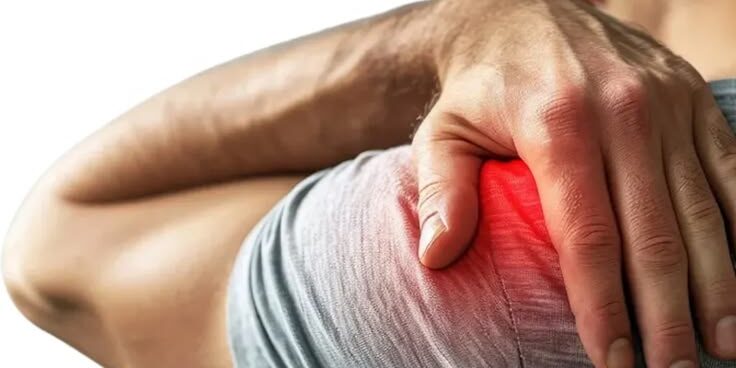
Your shoulder takes a hit during a hockey game or a fall off your bike. Hours later, the top of your shoulder hurts, swells, and feels weak when you reach overhead. That pattern often points to an AC joint sprain, one of the most common shoulder injuries I treat in active people.
An AC joint sprain happens when the ligaments connecting your collarbone to your shoulder blade get stretched or torn. Early diagnosis matters because it guides the right treatment and protects you from long-term shoulder problems. The good news is reassuring: most patients recover well with proper care, and many never need surgery.
By the end of this guide, you’ll understand the symptoms, causes, injury grades, treatment options, and recovery timeline, plus when to see an orthopedic shoulder specialist.
What Is an AC Joint Sprain?
The acromioclavicular (AC) joint sits at the top of your shoulder. It connects the end of your collarbone (clavicle) to a part of your shoulder blade called the acromion.
Two main groups of ligaments hold this joint together:
- Acromioclavicular ligaments – stabilize the joint directly
- Coracoclavicular ligaments – give the joint extra support and strength
An acromioclavicular joint sprain occurs when these ligaments stretch or tear. Doctors often call a more serious AC joint injury a shoulder separation, because the collarbone can shift away from the shoulder blade.
This joint helps you lift your arm overhead, carry weight, and move your shoulder smoothly. When the ligaments are damaged, that smooth motion becomes painful.
Common Causes of AC Joint Sprains
Most AC joint injuries come from a direct blow or a fall onto the shoulder. Common causes include:
- Falls onto the tip of the shoulder or an outstretched hand
- Sports injuries during contact or high-speed activity
- Cycling accidents, especially going over the handlebars
- Skiing crashes
- Football tackles and collisions
- Hockey body checks into the boards
- Workplace injuries from falls or heavy lifting
- Motor vehicle accidents
- Weightlifting, which can stress the joint over time
This is why AC joint sprains are such a frequent shoulder sports injury among athletes and active adults.
Symptoms of an AC Joint Sprain
AC joint symptoms can range from mild to severe, depending on how much the ligaments are damaged. Watch for:
- Pain on top of the shoulder
- Swelling around the joint
- Bruising
- Tenderness when you press the area
- A visible bump over the shoulder
- Pain when reaching overhead
- Pain when crossing your arm across your chest
- Weakness in the shoulder or arm
- Limited range of motion
A bump over the top of the shoulder often signals a more serious shoulder ligament injury. If you notice an obvious deformity, see a doctor promptly.
Grades of AC Joint Injuries
Orthopedic surgeons grade AC joint sprains by how much damage the ligaments have and how far the collarbone has shifted. The Rockwood system uses six grades.
| Grade | Ligament Damage | Symptoms | Treatment | Expected Recovery |
| Grade I | AC ligaments stretched, not torn | Mild pain, slight tenderness, no bump | Rest, ice, sling | 1–2 weeks |
| Grade II | AC ligaments torn; CC ligaments stretched | Moderate pain, small bump, swelling | Sling, physiotherapy | 2–6 weeks |
| Grade III | AC and CC ligaments fully torn | Clear bump, pain, weakness | Often non-surgical; surgery in some cases | 6–12 weeks |
| Grade IV–VI | Severe tears with major displacement | Obvious deformity, severe pain, instability | Usually surgery | 3–6 months |
Most people deal with AC joint grade 1, AC joint grade 2, or AC joint grade 3 injuries. Grades IV through VI are rare and almost always need surgery.
How Orthopedic Specialists Diagnose an AC Joint Sprain
Accurate shoulder injury diagnosis starts with a careful exam and your history. Here is how I assess this injury:
- Medical history – I ask how the injury happened and what makes it worse.
- Physical examination – I check for swelling, a bump, tenderness, and limited motion.
- Cross-body adduction test – You bring your arm across your chest. Pain in this position points to the AC joint.
- X-rays – These show how far the collarbone has shifted and rule out a fracture.
- MRI – This shows soft tissue and ligament damage in detail.
- Ultrasound – A quick way to view the ligaments in some cases.
- CT scan – Used when complex bone injuries need a closer look.
Matching exam findings with imaging lets me grade the injury correctly and build the right plan.
Treatment Options
AC joint treatment depends on the grade, your activity level, and your goals. Most patients start with non-surgical care.
Non-Surgical Treatment
For Grade I, II, and many Grade III injuries, conservative care works well:
- Rest from activities that cause pain
- Ice for 15–20 minutes several times a day to reduce swelling
- Sling to support the arm and ease stress on the joint
- NSAIDs (such as ibuprofen) to manage pain and inflammation
- Physiotherapy to restore movement and strength
- Range-of-motion exercises once early pain settles
- Strengthening of the shoulder and surrounding muscles
- Gradual return to activity as the joint heals
Surgical Treatment
AC joint surgery is less common but sometimes needed. I may recommend surgery when there is:
- Severe instability of the joint
- Displaced injuries (Grades IV–VI)
- A high-demand athlete who needs full overhead strength
- Persistent pain that doesn’t improve with months of conservative care
Surgery rebuilds or stabilizes the torn ligaments. When appropriate, I use minimally invasive shoulder surgery, which can mean smaller incisions and a smoother recovery. You can learn more on our Shoulder Arthroscopy.
Recovery Timeline
AC joint recovery time varies by grade and treatment. These are general estimates:
- Grade I: 1–2 weeks
- Grade II: 2–6 weeks
- Grade III: 6–12 weeks
- Post-surgery: 3–6 months for full recovery
Shoulder rehabilitation guides each stage. Most desk workers return to work within days to a couple of weeks, while jobs with heavy lifting take longer. Athletes usually return to sports once they regain full motion, strength, and confidence, often with a doctor’s clearance and a sport-specific plan.
Exercises That Help Recovery
The right exercises rebuild strength and motion. Start these only after your physician clears you, since starting too early can slow healing.
- Pendulum exercises – Gently swing your arm in small circles to ease stiffness.
- Scapular stabilization – Strengthen the muscles that control your shoulder blade.
- Rotator cuff strengthening – Build the muscles that support and stabilize the shoulder.
- Stretching – Restore flexibility once pain allows.
A physiotherapist can tailor these moves to your grade and progress. Our Sports Injuries and Shoulder Conditions offer more recovery guidance.
Possible Complications if Left Untreated
Ignoring an AC joint injury can lead to lasting problems. Untreated or poorly healed sprains may cause:
- Chronic pain in the shoulder
- Arthritis in the joint over time
- Instability and a feeling that the shoulder gives way
- Weakness in the arm
- Reduced range of motion
- Difficulty lifting objects overhead
Early, proper care lowers these risks. Related issues like rotator cuff tears, frozen shoulder, and shoulder pain can develop or worsen if shoulder problems go unmanaged.
When Should You See an Orthopedic Surgeon?
See an orthopedic shoulder specialist if you notice:
- A visible deformity or bump on top of the shoulder
- Severe pain that does not ease with rest and ice
- Inability to lift your arm
- Numbness or tingling in the arm or hand
- Persistent swelling
- AC joint pain or symptoms lasting more than several days
Quick evaluation protects your shoulder and speeds your recovery. Explore our full range of Orthopedic Services to see how we can help.
Frequently Asked Questions
What is an AC joint sprain?
An AC joint sprain is an injury to the ligaments connecting your collarbone to your shoulder blade. It usually results from a fall or direct blow to the shoulder. Symptoms include pain, swelling, and sometimes a visible bump on top of the shoulder.
How long does an AC joint sprain take to heal?
AC joint recovery time depends on the grade. Grade I heals in 1–2 weeks, Grade II in 2–6 weeks, and Grade III in 6–12 weeks. Injuries that need surgery may take 3–6 months for full recovery and a return to sports.
Can an AC joint sprain heal without surgery?
Yes. Most AC joint sprains, including Grade I, II, and many Grade III injuries, heal with non-surgical care. Rest, ice, a sling, anti-inflammatory medication, and physiotherapy usually restore full function without an operation.
Is an AC joint sprain the same as a shoulder separation?
They are closely related. A shoulder separation is a more serious AC joint sprain where the collarbone shifts away from the shoulder blade. Mild sprains may not cause separation, while higher-grade injuries often do.
What are the symptoms of an AC joint injury?
Common AC joint symptoms include pain on top of the shoulder, swelling, bruising, tenderness, and a visible bump. You may also feel weakness, limited motion, and pain when reaching overhead or crossing your arm across your chest.
Can I exercise with an AC joint sprain?
Only after your physician clears you. Early gentle moves like pendulum exercises help, while strengthening comes later. Starting heavy activity too soon can slow healing. A physiotherapist can design a safe, step-by-step shoulder rehabilitation plan for your grade.
When is surgery necessary?
AC joint surgery is usually reserved for severe injuries (Grades IV–VI), major instability, displaced joints, high-demand athletes, or pain that persists despite months of conservative care. Your orthopedic surgeon will weigh your injury, activity level, and goals before recommending surgery.
Will my shoulder fully recover?
Most patients regain full strength and motion with proper treatment. Mild sprains often heal completely within weeks. Higher-grade injuries may take longer, but with the right rehabilitation and care, the outlook for a strong, functional shoulder is excellent.
Why Choose Dr. Hasan Syed MD for AC Joint Injuries?
When your shoulder is injured, you want a specialist who treats the whole picture, not just the symptom. Here is what sets our care apart:
- Board-certified orthopedic surgeon with deep training in shoulder injuries
- Sports medicine expertise for athletes and active adults
- Shoulder specialist focused on AC joint and complex shoulder conditions
- Personalized treatment plans built around your goals and lifestyle
- Non-surgical and surgical care, so you get the right option for your injury
- Patient-focused approach that puts your recovery first
- Advanced diagnostic evaluation using exam findings and imaging together
Don’t let shoulder pain hold you back. Schedule an appointment with Dr. Hasan Syed MD today and take the first step toward a stronger, pain-free shoulder.