An AC joint separation is one of the most common shoulder injuries, especially after a fall or a hard hit during sports. It happens when the ligaments holding your collarbone to your shoulder blade stretch or tear. The result is often a sharp pain at the top of your shoulder and, in some cases, a visible bump.
If you’ve taken a tumble onto your shoulder, you’re not alone. This injury affects athletes, cyclists, and everyday people across Canada. The good news? Most cases heal well with the right care. In this guide, you’ll learn what causes a separated shoulder, how it’s graded, your treatment options, and when it’s time to see an orthopedic shoulder specialist.
What Is an AC Joint Separation?
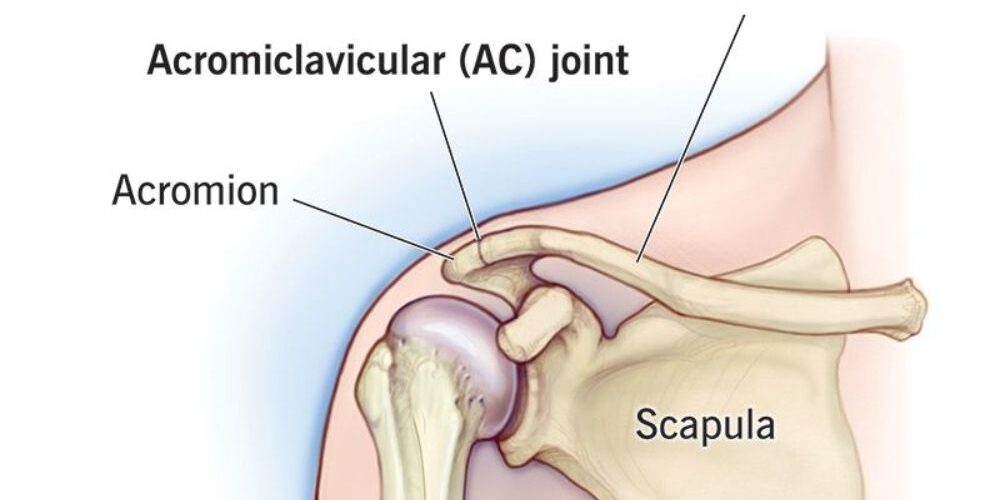
The AC joint, short for the acromioclavicular joint, sits at the top of your shoulder. It connects the end of your collarbone (clavicle) to a part of your shoulder blade called the acromion. Strong ligaments hold these bones together and keep the joint stable.
An AC joint separation happens when those ligaments stretch or tear. This is different from a shoulder dislocation. A dislocation affects the main ball-and-socket joint, while a separation only affects the AC joint at the top.
People often call this a “separated shoulder” because the collarbone and shoulder blade pull apart. Depending on the severity, the bones may shift slightly or move out of place entirely.
What Causes an AC Joint Separation?
Most AC joint injuries come from a sudden force pushing down on the shoulder. According to the American Academy of Orthopaedic Surgeons (AAOS), a direct blow or fall is the usual trigger.
Common causes include:
- Falls onto the shoulder, such as slipping on ice or tripping
- Contact sports like hockey, football, and rugby
- Cycling accidents, where you land hard on your shoulder
- Motor vehicle accidents that jolt the upper body
- Workplace injuries from lifting or falling
- Direct trauma to the top of the shoulder
If you play winter sports or ride a bike on Canadian roads, you face a higher risk during the colder months.
Symptoms of AC Joint Separation
AC joint separation symptoms can range from mild soreness to severe pain. The signs often appear right after the injury.
Watch for these symptoms:
- Pain at the top of the shoulder
- Swelling and tenderness
- Bruising around the joint
- Limited shoulder movement
- Weakness when lifting
- A visible bump over the collarbone
- Sharp pain when raising your arm
- Trouble sleeping on the affected side
The bump is a telltale sign. It forms when the collarbone lifts away from the shoulder blade.
Grades of AC Joint Separation
Doctors use the Rockwood Classification to describe how severe the injury is. It ranges from Grade 1 (mild) to Grade 6 (rare and serious). This system, recognized by orthopedic specialists, helps guide treatment.
Here’s a simple breakdown:
| Grade | Ligament Damage | Joint Displacement | Typical Treatment | Recovery Expectations |
| Grade 1 | Mild sprain, no tear | None | Rest, ice, sling | 1–2 weeks |
| Grade 2 | Partial tear | Slight | Sling, physical therapy | 4–6 weeks |
| Grade 3 | Full tear | Moderate, visible bump | Often non-surgical; surgery for some | 6–12 weeks |
| Grade 4 | Full tear | Collarbone pushed backward | Surgery usually needed | 3–6 months |
| Grade 5 | Severe tear | Large displacement | Surgery recommended | 3–6 months |
| Grade 6 | Severe tear | Collarbone pushed downward (rare) | Surgery required | 3–6 months |
Grades 1 and 2 are the most common and usually heal without surgery. Higher grades often need a specialist’s care.
How Is an AC Joint Separation Diagnosed?
Getting an accurate diagnosis matters because it shapes your treatment plan. Your orthopedic surgeon will start with a few key steps.
The process usually includes:
- Medical history. Your doctor asks how the injury happened and where it hurts.
- Physical exam. They check for swelling, the bump, and your range of motion.
- X-rays. These show the bones and reveal how far the joint has shifted.
- Stress views. Sometimes an X-ray is taken while you hold a light weight to highlight instability.
- MRI. This may be used to check soft tissue and ligament damage in detail.
- CT scan. This is rare and reserved for complex or unclear cases.
Most diagnoses rely on a physical exam and X-rays, as noted by trusted sources like Cleveland Clinic and Mayo Clinic.
Treatment Options
Treatment depends on the grade of your injury, your activity level, and your goals. There are two main paths: non-surgical and surgical.
Non-Surgical Treatment
Most low-grade AC joint sprains heal well without surgery. This is the first choice for Grade 1 and Grade 2 injuries, and often for Grade 3.
Non-surgical shoulder separation treatment may include:
- Rest to let the ligaments heal
- Ice to reduce swelling and pain
- A sling to support and protect the shoulder
- Anti-inflammatory medication to ease discomfort
- Physical therapy to restore strength and motion
- Range-of-motion exercises to prevent stiffness
- A strengthening program to rebuild shoulder support
You’re a good candidate for this approach if your injury is mild to moderate and the joint stays fairly stable.
Surgical Treatment
Some injuries need surgery to restore stability and function. Your surgeon may recommend AC joint surgery if you have:
- Severe ligament injuries
- High-grade separations (Grades 4, 5, and 6)
- An active lifestyle as an athlete
- A job involving heavy manual labor
- Persistent pain after non-surgical care
- Chronic shoulder instability
Modern reconstruction techniques rebuild the torn ligaments using strong sutures or tissue grafts. These methods restore the connection between the collarbone and shoulder blade. Many procedures today are minimally invasive, which can mean smaller incisions and a smoother recovery.
Recovery Timeline
Healing takes time, and AC joint rehabilitation plays a big role. Here’s a realistic timeline, though every patient is different.
- Week 1: Rest, ice, and wear your sling. Focus on managing pain.
- Weeks 2–4: Begin gentle motion exercises as your pain settles.
- Weeks 4–8: Build strength and improve range of motion with physical therapy.
- 2–3 months: Most daily activities feel comfortable again.
- 3–6 months: Full strength returns, especially after surgery.
- Return to sports: Often 3–6 months, depending on grade and progress.
- Return to heavy lifting: Usually after your surgeon clears you, around 4–6 months for severe cases.
Patience matters. Pushing too hard too soon can slow your recovery.
Potential Complications
Most people recover fully, but it helps to know the possible risks. Johns Hopkins Medicine notes that some patients may experience long-term effects.
Possible complications include:
- Chronic pain in the shoulder
- Arthritis in the joint over time
- Weakness during certain movements
- A lasting cosmetic bump
- Limited range of motion
- Recurrent instability in severe cases
A small bump may remain even after a full recovery. This is common with Grade 3 and higher injuries and usually doesn’t affect function.
Can an AC Joint Separation Heal Without Surgery?
Yes, many AC joint injuries heal without surgery. Grade 1 and Grade 2 sprains typically recover well with rest, a sling, and physical therapy.
Higher grades are different. Grade 3 cases vary, and your surgeon will weigh your activity level and symptoms. Grades 4 through 6 usually need surgery to restore stability.
The right choice depends on you. A skilled orthopedic surgeon creates an individualized plan based on your injury, goals, and lifestyle.
How to Prevent AC Joint Injuries
You can’t prevent every accident, but a few habits lower your risk of a shoulder ligament injury.
Try these tips:
- Wear protective equipment like shoulder pads during contact sports
- Strengthen your shoulders with regular exercises
- Use safe sports techniques to avoid awkward falls
- Prevent falls by clearing ice and wearing proper footwear
- Use proper form during workouts and heavy lifting
Strong, stable shoulders handle impact better and recover faster.
When Should You See an Orthopedic Surgeon?
Not every sore shoulder needs a specialist, but some signs call for prompt care. See an orthopedic shoulder specialist in Canada if you notice:
- Severe or worsening pain
- A visible shoulder deformity
- Trouble lifting your arm
- Persistent swelling
- Numbness or tingling
- Ongoing weakness
- A sports injury that won’t improve
Early evaluation leads to better outcomes. If you’ve injured your shoulder or live with nagging pain, schedule a consultation with Dr. Hasan Syed for an expert assessment and a personalized treatment plan.
Quick Summary: An AC joint separation affects the ligaments at the top of your shoulder. Mild grades heal with rest and therapy, while severe grades may need surgery. Early diagnosis and a tailored plan offer the best path to recovery.
For related shoulder concerns, you may also want to read about rotator cuff injuries, frozen shoulder, biceps tendinitis, and shoulder instability. You can also book an orthopedic consultation directly.
Frequently Asked Questions
1. What is an AC joint separation?
An AC joint separation is an injury to the ligaments connecting your collarbone to your shoulder blade. It often happens after a fall or direct blow to the shoulder. Symptoms include pain, swelling, and sometimes a visible bump at the top of the shoulder.
2. Can an AC joint separation heal without surgery?
Yes. Most mild and moderate cases, including Grade 1 and Grade 2 injuries, heal well with rest, a sling, and physical therapy. Severe injuries, such as Grades 4 through 6, usually need surgery to restore shoulder stability and function.
3. How long does recovery take?
Recovery depends on the grade. Mild sprains heal in one to two weeks, while moderate injuries take four to six weeks. Severe separations and surgical cases may need three to six months. Following your rehabilitation plan helps speed healing.
4. What is the difference between a shoulder dislocation and an AC joint separation?
A shoulder dislocation affects the main ball-and-socket joint, where the upper arm bone slips out of the socket. An AC joint separation affects the smaller joint at the top of the shoulder, where the collarbone meets the shoulder blade.
5. Can I exercise with an AC joint injury?
Gentle movement is often encouraged once pain allows, but avoid heavy lifting and contact activities until cleared. Your orthopedic surgeon and physical therapist will guide you on safe exercises. Pushing too hard too soon can slow healing and worsen the injury.
6. Will the bump on my shoulder go away?
Sometimes. With mild injuries, swelling fades and the bump may disappear. In Grade 3 and higher separations, a small bump can remain permanently. This is usually cosmetic and rarely affects how well your shoulder works.
7. When is surgery recommended?
Surgery is recommended for high-grade separations (Grades 4, 5, and 6), severe ligament tears, or chronic instability. Athletes, manual laborers, and patients with persistent pain after non-surgical care may also benefit. Your surgeon will tailor the decision to your needs.
8. Is physical therapy necessary?
For most patients, yes. Physical therapy restores strength, motion, and stability after an AC joint injury. It also lowers the risk of stiffness and weakness. Whether you have surgery or not, a structured rehabilitation program supports a full recovery.