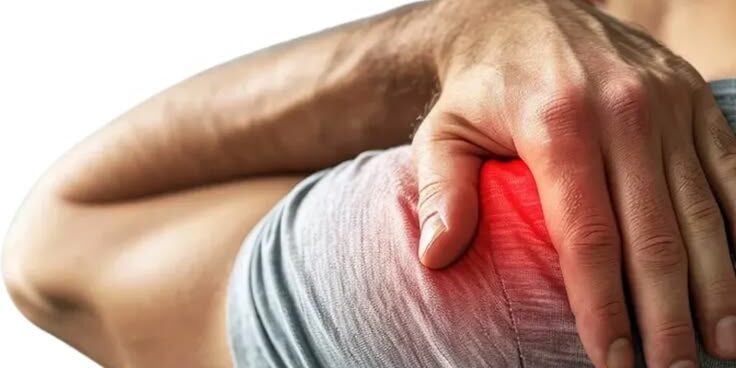
You fall off your bike or take a hard check into the boards. A few hours later, the top of your shoulder throbs, swells, and feels weak when you reach overhead. This pattern usually points to an AC joint sprain, one of the most common shoulder injuries I treat in athletes, weekend warriors, and active adults.
An AC joint sprain is a stretch or tear of the ligaments that hold your collarbone to your shoulder blade. Most patients heal well without surgery. An accurate diagnosis still matters, because the injury grade decides your treatment, your recovery time, and your risk of long-term shoulder pain.
In this guide, you’ll learn:
- How to recognize AC joint sprain symptoms, including the warning signs of a shoulder separation
- What each Rockwood grade (I–VI) means for your shoulder
- Which AC joint treatment options work best, from a sling to surgery
- How long recovery takes and which exercises help you heal safely
Key Takeaways: AC Joint Sprain at a Glance
- What it is: An injury to the ligaments connecting the collarbone (clavicle) to the top of the shoulder blade (acromion).
- Common causes: A fall onto the tip of the shoulder, contact sports, and cycling or skiing crashes.
- Main symptoms: Pain on top of the shoulder, swelling, tenderness, and sometimes a visible bump.
- Treatment: Grades I and II heal without surgery. Many Grade III injuries do too. Grades IV–VI usually need surgery.
- Recovery: From 1–2 weeks for mild sprains to 3–6 months after surgery.
What Is an AC Joint Sprain?
An AC joint sprain is a ligament injury at the very top of your shoulder. The acromioclavicular (AC) joint connects the outer end of your collarbone to the acromion, the bony peak of your shoulder blade. You can feel it as a small ridge at the top of your shoulder.
Two ligament groups keep this joint stable:
- Acromioclavicular (AC) ligaments: Hold the joint together and control front-to-back movement.
- Coracoclavicular (CC) ligaments: Anchor the collarbone down to the coracoid process (a small hook of bone on the shoulder blade) and control up-and-down movement.
An acromioclavicular joint sprain happens when one or both ligament groups stretch or tear. The more ligaments that fail, the more the collarbone can drift out of position.
AC Joint Sprain vs. Shoulder Separation: What’s the Difference?
A shoulder separation is a higher-grade AC joint sprain. The terms overlap, but they are not identical. A mild sprain stretches the ligaments without moving the joint. A shoulder separation occurs when the ligaments tear enough for the collarbone to shift away from the acromion, often creating a visible bump.
A shoulder separation is also different from a shoulder dislocation. A dislocation involves the ball-and-socket joint (glenohumeral joint) lower in the shoulder, which I cover on my shoulder instability page.
For a deeper look at this joint and the full range of injuries it can suffer, visit my AC joint injury page.
What Causes an AC Joint Sprain?
A direct blow to the top of the shoulder causes most AC joint sprains. The classic mechanism is falling onto the point of your shoulder with your arm tucked at your side. The impact drives the acromion downward while the collarbone stays in place, and the ligaments between them stretch or tear.
Common causes include:
- Falls onto the shoulder or an outstretched hand
- Cycling crashes, especially going over the handlebars
- Contact sports such as football, hockey, rugby, and wrestling
- Skiing and snowboarding falls
- Workplace accidents involving falls from height
- Motor vehicle accidents
- Repetitive heavy lifting, such as bench pressing, which stresses the joint over time
AC joint injuries make up a large share of shoulder injuries in contact sports, and they are especially common in young male athletes. If your injury followed a fall or collision, note exactly how you landed — that detail helps your doctor narrow the diagnosis quickly.
What Are the Symptoms of an AC Joint Sprain?
AC joint sprain symptoms center on the top of the shoulder. Their severity tracks closely with the injury grade. Watch for:
- Pain directly on top of the shoulder
- Swelling and bruising around the joint
- Tenderness when you press on the AC joint
- A visible bump or step-off where the collarbone sits higher than the shoulder
- Pain when you reach overhead
- Pain when you bring your arm across your chest
- Weakness or reduced range of motion
- Pain when you sleep on the injured side
A visible bump signals a more serious shoulder ligament injury. It means the CC ligaments have likely torn and the collarbone has shifted. If you see an obvious deformity, schedule an orthopedic evaluation within a few days rather than waiting to see if it settles.
Try this: Gently place your fingertips on the top of each shoulder and compare sides. A raised collarbone end or pinpoint tenderness at the joint is worth reporting to your doctor.
AC Joint Sprain Grades: The Rockwood Classification
Orthopedic surgeons grade AC joint sprains with the Rockwood classification. This six-grade system measures which ligaments are torn and how far, and in which direction, the collarbone has moved. Your grade is the single most important factor in your treatment plan.
| Grade | Ligament Damage | Collarbone Position | Typical Symptoms | Usual Treatment | Expected Recovery |
|---|---|---|---|---|---|
| Grade I | AC ligaments stretched; CC ligaments intact | Normal | Mild pain and tenderness, no bump | Rest, ice, sling for comfort | 1–2 weeks |
| Grade II | AC ligaments torn; CC ligaments sprained | Slightly raised | Moderate pain, swelling, small bump | Sling, physical therapy | 2–6 weeks |
| Grade III | AC and CC ligaments fully torn | Clearly raised (up to 100% displacement) | Visible bump, pain, weakness | Often non-surgical; surgery for select patients | 6–12 weeks |
| Grade IV | AC and CC ligaments torn | Pushed backward into or through the trapezius muscle | Severe pain, posterior deformity | Surgery | 3–6 months |
| Grade V | AC and CC ligaments torn; muscle attachments stripped | Severely raised (100–300% displacement) | Large deformity, significant pain | Surgery | 3–6 months |
| Grade VI | AC and CC ligaments torn | Pushed below the acromion or coracoid | Severe pain, major deformity; very rare | Surgery | 3–6 months |
Most patients I see have Grade I, II, or III injuries. Grades IV through VI are uncommon. They usually follow high-energy trauma, such as a motorcycle crash, and they almost always require surgical repair.
Mini-summary: Grades I–II heal with conservative care. Grade III is a judgment call based on your activity level. Grades IV–VI need surgery.
How Do Orthopedic Specialists Diagnose an AC Joint Sprain?
An accurate diagnosis combines your history, a hands-on exam, and imaging. Here is the step-by-step process I follow in my clinic:
- Review your injury history. I ask how you fell, where you felt pain first, and which movements make it worse.
- Inspect and palpate the shoulder. I look for swelling, bruising, and a bump, then press on the AC joint to find the exact source of pain.
- Perform the cross-body adduction test. You bring your injured arm across your chest. Pain at the top of the shoulder in this position points strongly to the AC joint.
- Order X-rays. Standard and specialized views (such as the Zanca view) show how far the collarbone has shifted and rule out a collarbone fracture.
- Add an MRI when needed. MRI shows ligament tears in detail and reveals related damage, such as a rotator cuff tear or labral injury.
- Use ultrasound or CT in select cases. Ultrasound offers a quick view of the ligaments. CT helps when a complex bone injury needs a closer look.
Matching exam findings with imaging lets me assign the correct grade. That grade drives every decision that follows. Bring a list of your symptoms and any prior shoulder injuries to your first appointment — it speeds up this process.
AC Joint Treatment Options
AC joint treatment depends on three factors: your injury grade, your activity level, and your goals. A college quarterback and a retired office worker with the same Grade III injury may choose different paths. Most patients start with non-surgical care.
Non-Surgical Treatment for an AC Joint Sprain
Non-surgical care heals Grade I, Grade II, and most Grade III injuries. The goal is to calm pain early, then rebuild motion and strength. A typical plan follows these steps:
- Protect the joint. Wear a sling for comfort, usually for a few days in Grade I and up to 2–3 weeks in higher grades.
- Control swelling. Apply ice for 15–20 minutes several times a day during the first 48–72 hours.
- Manage pain. Take anti-inflammatory medication (NSAIDs such as ibuprofen or naproxen) if your doctor approves it.
- Restore motion. Begin gentle range-of-motion exercises as soon as pain allows.
- Rebuild strength. Progress to shoulder blade and rotator cuff strengthening with a physical therapist.
- Return to activity gradually. Resume sports or heavy work only after you regain full, pain-free motion and strength.
Common mistake: Keeping the arm in a sling too long. Extended immobilization leads to stiffness and, in some cases, frozen shoulder. What to do instead: Remove the sling for gentle movement as soon as your doctor clears you.
Surgical Treatment for an AC Joint Sprain
Surgery is the right choice for a smaller group of patients. I recommend surgical repair when a patient has:
- A Grade IV, V, or VI injury
- Severe instability or major displacement of the collarbone
- A Grade III injury in a high-demand athlete or overhead laborer
- Persistent pain or weakness after three or more months of conservative care
Surgery restores the position of the collarbone and reconstructs the torn ligaments. Depending on the injury, I may use a suture-button device, a tendon graft to rebuild the CC ligaments, or a combination of both. When appropriate, I perform these procedures arthroscopically (through small incisions with a camera), which reduces tissue damage and can make early recovery more comfortable.
Your surgical decision should follow a detailed conversation about your goals. Ask your surgeon how each option affects your return-to-sport timeline and long-term joint health.
AC Joint Sprain Recovery Timeline
AC joint sprain recovery time depends on your grade and treatment. These timelines reflect typical outcomes for patients who follow a structured rehabilitation plan:
| Injury Type | Return to Daily Activities | Return to Sports or Heavy Work |
|---|---|---|
| Grade I | A few days | 1–2 weeks |
| Grade II | 1–2 weeks | 2–6 weeks |
| Grade III (non-surgical) | 2–4 weeks | 6–12 weeks |
| After surgery | 6–8 weeks | 4–6 months |
Desk workers often return to work within days. Jobs that require lifting, climbing, or overhead reaching take longer. Athletes return to sport once they show full range of motion, normal strength compared with the uninjured side, and no pain with sport-specific drills.
Track your progress weekly: note your pain level, how high you can lift your arm, and which daily tasks still bother you. These notes help your care team adjust your plan.
Best Exercises for AC Joint Sprain Recovery
The right exercises restore motion, rebuild strength, and protect the joint from reinjury. Start them only after your physician or physical therapist clears you. Starting too early can delay healing.
Follow this progression:
- Start with pendulum exercises. Lean forward, let your injured arm hang, and swing it gently in small circles for 30–60 seconds.
- Add passive and assisted range of motion. Use your healthy arm or a stick to guide the injured arm through gentle forward and sideways lifts.
- Strengthen your shoulder blade muscles. Perform scapular squeezes and rows to stabilize the base of your shoulder.
- Build rotator cuff strength. Use light resistance bands for internal and external rotation.
- Restore flexibility. Add gentle stretches for the chest and back of the shoulder once pain allows.
- Progress to sport- or job-specific training. Rebuild overhead strength and power under guidance before full return.
Avoid during early recovery: bench press, dips, push-ups, and heavy overhead lifting. These movements load the AC joint directly. A physical therapist can tailor each phase to your grade and progress.
What Happens If an AC Joint Sprain Goes Untreated?
An untreated AC joint sprain can cause lasting shoulder problems. Poorly healed ligaments leave the joint unstable or mechanically irritated. Over time, this can lead to:
- Chronic shoulder pain, especially with overhead activity
- Post-traumatic arthritis in the joint (see AC joint osteoarthritis)
- Ongoing instability and a feeling that the shoulder is “loose”
- Weakness with lifting and pushing
- Reduced range of motion
- Distal clavicle osteolysis, a painful breakdown of the end of the collarbone
Early, proper care lowers these risks. Untreated shoulder injuries can also mask or worsen related problems, so a full evaluation of your shoulder pain is worth scheduling if symptoms linger.
When Should You See an Orthopedic Surgeon for an AC Joint Sprain?
See an orthopedic shoulder specialist when your symptoms point to more than a mild sprain. Book an evaluation if you notice:
- A visible bump or deformity on top of the shoulder
- Severe pain that does not improve with rest, ice, and over-the-counter medication
- Inability to lift your arm
- Numbness, tingling, or weakness in your arm or hand
- Swelling that persists beyond a week
- Pain that lasts more than one to two weeks after the injury
Seek emergency care right away if you have severe deformity, skin tenting over the collarbone, or trouble breathing. A prompt evaluation protects your shoulder and shortens your path back to full function.
Frequently Asked Questions About AC Joint Sprains
What is an AC joint sprain?
An AC joint sprain is an injury to the ligaments that connect your collarbone to your shoulder blade at the top of the shoulder. It usually results from a fall or direct blow to the shoulder. Symptoms include pain, swelling, tenderness, and sometimes a visible bump.
How long does an AC joint sprain take to heal?
AC joint sprain recovery depends on the grade. Grade I heals in 1–2 weeks, Grade II in 2–6 weeks, and Grade III in 6–12 weeks. Injuries that require surgery take 4–6 months for a full return to sports.
Can an AC joint sprain heal without surgery?
Yes. Grade I, Grade II, and most Grade III AC joint sprains heal without surgery. A sling, ice, anti-inflammatory medication, and physical therapy restore full function for most patients.
Is an AC joint sprain the same as a shoulder separation?
A shoulder separation is a higher-grade AC joint sprain. Both involve the same ligaments, but a separation means the ligaments have torn enough for the collarbone to shift out of position. Mild sprains do not cause separation.
What does an acromioclavicular joint sprain feel like?
An acromioclavicular joint sprain feels like sharp or aching pain on top of the shoulder. Pain worsens when you reach overhead, sleep on that side, or bring your arm across your chest. Higher grades add swelling, bruising, and a visible bump.
Will I have a permanent bump after an AC joint sprain?
Grade III and higher injuries often leave a permanent bump if treated without surgery. The bump is usually a cosmetic issue only. Most patients regain full strength and function despite it.
Can I exercise with an AC joint sprain?
You can exercise once your physician clears you. Gentle pendulum and range-of-motion exercises come first, followed by strengthening. Avoid bench press, push-ups, and heavy overhead lifting until your shoulder is fully healed.
When is surgery necessary for an AC joint sprain?
Surgery is necessary for Grade IV–VI injuries, severe instability, and select Grade III injuries in high-demand athletes or laborers. It is also an option when pain persists after three or more months of non-surgical AC joint treatment.
Will my shoulder fully recover from an AC joint sprain?
Most patients regain full strength and motion with proper treatment. Mild sprains often heal completely within weeks. Higher-grade injuries take longer, but structured rehabilitation leads to strong, functional outcomes for the large majority of patients.
Why Choose Dr. Hasan Syed MD for AC Joint Sprain Treatment?
The right specialist treats your whole shoulder, not just the symptom. As a board-certified orthopedic surgeon with focused expertise in shoulder injuries and sports medicine, I evaluate every AC joint sprain with your goals in mind — whether that means returning to the field, the job site, or simply sleeping through the night without pain.
Patients choose my practice for:
- Board-certified orthopedic expertise in shoulder and sports injuries
- Precise diagnosis that combines a hands-on exam with advanced imaging
- Full spectrum of care, from non-surgical rehabilitation to arthroscopic reconstruction
- Personalized treatment plans built around your activity level and goals
- Two convenient Southern California locations in Chino and Loma Linda
Conclusion: Get the Right Care for Your AC Joint Sprain
An AC joint sprain ranges from a mild ligament stretch to a complete shoulder separation. The Rockwood grade determines your path. Most Grade I, II, and III injuries heal with rest, a short period in a sling, and targeted physical therapy. Severe Grade IV–VI injuries need surgical repair to restore stability and strength.
The biggest risk is guessing. An untreated shoulder ligament injury can lead to chronic pain, arthritis, and lost strength — problems that are easier to prevent than to fix.
If you have pain, swelling, or a bump on top of your shoulder, get an accurate grade first. Schedule an appointment with Dr. Hasan Syed MD