Shoulder pain that flares when you reach overhead or roll onto your side at night often points to one common culprit: rotator cuff tendinitis. It’s one of the most frequent reasons adults see a doctor for shoulder problems, and the good news is that most cases improve without surgery.
This guide explains what the condition is, why it happens, and how it’s treated—so you can make informed decisions with your care team. If your symptoms have lingered for weeks or are getting in the way of daily life, a proper orthopedic evaluation for shoulder pain is the clearest path to an accurate diagnosis and a plan that fits your situation.
What Is Rotator Cuff Tendinitis?
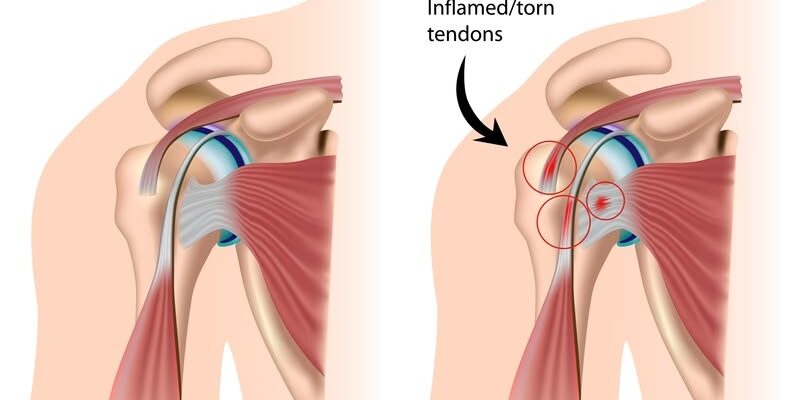
Rotator cuff tendinitis is irritation or inflammation of the tendons in the rotator cuff—the group of muscles and tendons that stabilize your shoulder. When these tendons become overloaded or aggravated, they swell and cause pain, especially during arm movement.
Clinicians increasingly use the term “tendinopathy” instead of “tendinitis.” That’s because chronic tendon problems often involve gradual tissue changes and wear rather than classic inflammation alone. For most patients, the practical takeaway is the same: the tendon is irritated, movement hurts, and targeted rehabilitation usually helps.
What Does the Rotator Cuff Do?
The rotator cuff keeps your shoulder centered and stable while you move your arm. It’s made up of four muscles—the supraspinatus, infraspinatus, teres minor, and subscapularis—whose tendons attach to the top of the upper arm bone.
Together, these tendons let you:
- Lift and rotate your arm
- Reach overhead, behind your back, and across your body
- Hold the ball of the shoulder joint securely in its socket
The supraspinatus tendon sits in a tight space beneath the bony tip of the shoulder blade. Because of that location, it’s the tendon most often irritated in rotator cuff tendinitis.
What Causes Rotator Cuff Tendinitis?
Rotator cuff tendinitis usually develops from repeated stress on the shoulder tendons over time. Rather than a single injury, it’s often the buildup of small strains that outpace the tendon’s ability to recover.
Common causes and risk factors include:
- Repetitive overhead activity — painting, construction, stocking shelves, or assembly-line work
- Sports with overhead motion — swimming, tennis, baseball, and weightlifting
- Work-related strain — jobs that involve lifting, reaching, or sustained arm positions
- Age-related changes — tendons naturally lose some strength and blood supply after roughly age 40
- Poor movement mechanics — muscle imbalances or weak shoulder-blade control that overload the cuff
Age is a meaningful factor. Tendons become less resilient over time, which is why symptoms often appear in middle-aged and older adults even without a dramatic injury.
What Are the Symptoms of Rotator Cuff Tendinitis?
The hallmark symptom of rotator cuff tendinitis is shoulder pain that worsens with arm movement. It often builds gradually rather than starting suddenly.
Typical symptoms include:
- Pain on the outer or front of the shoulder, sometimes radiating down the arm
- Discomfort that increases when reaching overhead or out to the side
- Night pain, especially when lying on the affected shoulder
- Weakness when lifting or rotating the arm
- Reduced range of motion or stiffness
- A catching or aching sensation during certain movements
Mild cases may only bother you during specific activities. More persistent cases can interfere with sleep, dressing, and everyday tasks—which is a signal to get it evaluated.
How Is Rotator Cuff Tendinitis Diagnosed?
Rotator cuff tendinitis is diagnosed primarily through a clinical exam and your medical history. A physician reviews your symptoms, activities, and how the pain behaves, then examines the shoulder directly.
A typical evaluation includes:
- Reviewing your history — when the pain started, what worsens it, and how it affects daily activity.
- Testing range of motion — checking how far you can move the arm and where pain appears.
- Performing strength and provocative tests — specific maneuvers that stress the rotator cuff to identify the source of pain.
- Considering imaging when needed — ordering tests if the diagnosis is unclear or symptoms persist.
Imaging isn’t always required. When it is, an ultrasound or MRI (magnetic resonance imaging) can show the tendons in detail and help distinguish tendinitis from a tear. X-rays don’t show tendons directly but can reveal bone spurs or other issues that contribute to shoulder pain.
Rotator Cuff Tendinitis vs. a Rotator Cuff Tear
The key difference is tendon damage. Rotator cuff tendinitis means the tendon is irritated or inflamed, while a rotator cuff tear means the tendon fibers are actually torn—partially or completely.
Here’s how they generally compare:
- Tendinitis — pain and irritation without a structural break in the tendon; strength is often preserved.
- Partial tear — some tendon fibers are damaged; pain and mild weakness are common.
- Full-thickness tear — the tendon is torn through; significant weakness and difficulty lifting the arm can occur.
The two conditions can overlap, and long-standing tendon irritation can contribute to tearing over time. Because symptoms sometimes look similar, imaging and a physical exam help clarify which one you have—and that distinction shapes treatment.
How Is Rotator Cuff Tendinitis Treated?
Most rotator cuff tendinitis is treated without surgery, using a step-by-step approach that calms symptoms and rebuilds tendon capacity. The goal is to reduce pain while restoring strength and normal movement.
Evidence-based options include:
- Modify activity and rest relatively — scale back the movements that aggravate the tendon without stopping all activity, since complete immobility can worsen stiffness.
- Start physical therapy — a structured rehabilitation program is a cornerstone of treatment, focusing on stretching, rotator cuff strengthening, and shoulder-blade control.
- Manage pain when appropriate — options such as ice, activity changes, and certain medications may help; discuss what’s safe and suitable for you with a healthcare professional.
- Consider a corticosteroid injection selectively — an injection can reduce inflammation in some cases, but it isn’t an automatic first choice and is typically used when other measures haven’t provided enough relief.
- Discuss surgery only when indicated — surgery is generally reserved for cases that don’t respond to sustained conservative care, or when a significant tear is present.
No single treatment fits everyone. The right combination depends on your symptoms, activity level, imaging findings, and overall health, which is why individualized guidance matters.
The Role of Corticosteroid Injections
Corticosteroid injections are one tool—not a default solution. They may temporarily ease pain and inflammation, but the benefit can be short-lived, and repeated injections aren’t advised for everyone. Your physician can help weigh the potential benefits against the limitations for your specific case.
When Surgery Is Considered
Surgery is not the usual starting point for rotator cuff tendinitis. It becomes a consideration when pain and weakness persist despite months of appropriate rehabilitation, or when imaging shows a tear that’s unlikely to improve with conservative care alone.
How Long Does Rotator Cuff Tendinitis Take to Improve?
Recovery timelines vary, but many people notice meaningful improvement within a few weeks to a few months of consistent care. Milder cases often settle faster, while chronic tendon problems can take longer.
Factors that influence recovery include:
- How long symptoms have been present
- Your age and overall tendon health
- Consistency with physical therapy and home exercises
- The demands of your job or sport
- Whether a tear is also present
Sticking with a rehabilitation program is one of the strongest predictors of a good outcome. Progress can feel gradual, and that’s normal.
How to Reduce the Risk of Recurrence
Preventing another flare comes down to keeping the shoulder strong and avoiding sudden overload. Once symptoms settle, maintaining tendon capacity protects your progress.
Practical steps include:
- Continue rotator cuff and shoulder-blade strengthening exercises
- Warm up before overhead sports or heavy lifting
- Increase training or workload gradually, not abruptly
- Adjust workstation setup and repetitive movements when possible
- Take breaks during prolonged overhead tasks
Small, consistent habits protect the tendon far better than occasional intense effort.
When Should You See a Doctor for Rotator Cuff Pain?
See a doctor if shoulder pain lasts more than a couple of weeks, worsens, or limits your daily activities. Early evaluation helps prevent a minor irritation from becoming a longer-term problem.
Seek prompt medical attention if you experience:
- Sudden, severe shoulder pain after an injury or fall
- Marked weakness or an inability to lift the arm
- A noticeable loss of motion
- Pain that consistently disrupts your sleep
- Symptoms that don’t improve with rest and self-care
These signs can indicate a tear or another condition that needs timely assessment.
Take the Next Step Toward Shoulder Relief
Persistent or worsening shoulder pain deserves a clear answer. If overhead movements, weakness, or night pain are affecting your daily life, schedule an evaluation with the orthopedic team at Hasan Syed MD for an accurate diagnosis and a treatment plan built around your needs. Early, individualized care gives you the best chance at a full, lasting recovery.
Frequently Asked Questions
Can rotator cuff tendinitis heal without surgery?
Yes. Most cases improve with non-surgical care, including activity modification, physical therapy, and appropriate pain management. Surgery is reserved for cases that don’t respond to sustained conservative treatment.
Is it okay to exercise with rotator cuff tendinitis?
Often, yes—but the right exercises matter. Guided rehabilitation usually helps, while movements that sharply increase pain should be modified. A healthcare professional can tailor a program to your shoulder.
How is tendinitis different from a rotator cuff tear?
Tendinitis is tendon irritation without a structural break, while a tear means the tendon fibers are damaged. A physical exam and imaging such as ultrasound or MRI help tell them apart.
Does rotator cuff tendinitis go away on its own?
Mild cases can settle with rest and activity changes, but persistent symptoms usually respond best to structured treatment. Ignoring ongoing pain may allow the problem to worsen.
Why does my shoulder hurt more at night?
Lying on the shoulder or resting the arm in certain positions can compress irritated tendons, which is why night pain is a common feature of rotator cuff tendinitis.
This article is for educational purposes only and does not replace an individual evaluation by a qualified healthcare professional. Always consult your physician for advice about your specific symptoms, diagnosis, and treatment.