An ACL tear does not have a single healing time. Partial tears may improve over several weeks to months with structured rehabilitation. Complete tears often need reconstruction, especially in active people. After ACL reconstruction, recovery commonly takes about 6–12 months, and returning to pivoting sports may take around 9–12 months or longer, based on rehab milestones rather than a fixed date.
If you have just injured your knee, you probably want one clear number. The honest answer is that ACL recovery is measured in months, not days. How long yours takes depends on the type of tear, your treatment, your rehabilitation progress, and your personal goals. Let’s walk through what to expect.
What Is an ACL Tear?
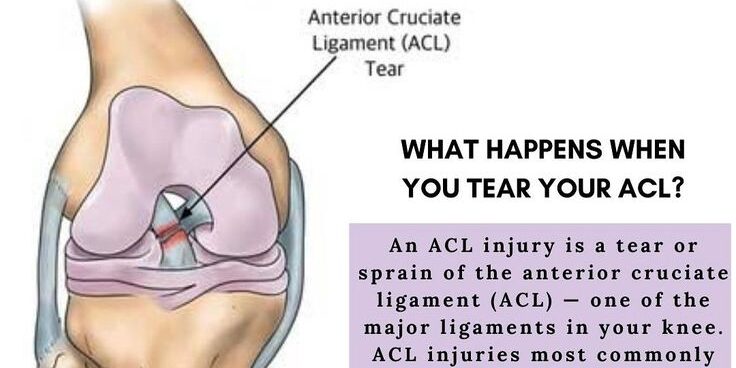
The anterior cruciate ligament (ACL) is one of the main ligaments inside your knee. It connects your thighbone to your shinbone and sits deep in the center of the joint. Its job is to keep your knee stable, especially when you twist, pivot, or change direction.
An ACL injury often happens during sports or activities that involve sudden stops, quick turns, jumping, or awkward landings. Many people feel or hear a “pop,” followed by swelling and a sense that the knee is loose or unstable. ACL tears range from partial to complete, and they sometimes occur alongside other injuries, such as a meniscus tear or cartilage damage.
How Long Does an ACL Tear Take to Heal?
There is no single answer, and any source promising one exact number is oversimplifying. Recovery depends on how severe the tear is and how you treat it.
Partial ACL tears may sometimes be managed without surgery. With guided rehabilitation, some people improve over several weeks to a few months. Complete ACL tears are less likely to return to normal stability on their own, though individual healing responses vary. In active individuals, a complete tear is often treated with reconstruction.
After ACL reconstruction, recovery commonly takes about 6–12 months. Returning to cutting and pivoting sports may take roughly 9–12 months or longer.
It helps to separate a few ideas:
- Symptom improvement: less pain and swelling
- Functional recovery: walking, bending, and daily activities feel easier
- Biological healing: the tissue or graft matures over time
- Return-to-sport readiness: the knee can safely handle demanding movements
You may feel better long before your knee is truly ready for sports. That gap is normal and important to respect.
Partial vs. Complete ACL Tear Recovery
The table below offers a general comparison. It is educational and not a guarantee for any individual.
| Partial ACL Tear | Complete ACL Tear | |
| Degree of injury | Some fibers torn, some intact | Ligament fully torn |
| Typical symptoms | Swelling, pain, mild looseness | Pop, rapid swelling, marked instability |
| Likelihood of instability | Lower, but possible | Higher, especially with pivoting |
| Common treatment | Often rehabilitation first | Rehab; reconstruction often considered in active people |
| Recovery considerations | Weeks to months with therapy | Longer-term management; months after surgery |
| Return-to-sport considerations | Depends on stability and goals | Based on objective milestones, often 9–12+ months |
ACL Recovery Timeline
Every recovery is personal, but these general frameworks give you a sense of the journey. They are not a prescription for your knee.
For nonsurgical treatment, care usually progresses from:
- Controlling swelling and pain
- Restoring knee motion
- Rebuilding strength
- Balance and neuromuscular training
- Functional activity
- Gradual return to appropriate activities
For patients undergoing reconstruction, general phases often look like this:
- Weeks 1–2: Control swelling, manage pain, protect the knee, restore motion, and begin prescribed rehab.
- Weeks 2–6: Improve walking, range of motion, and basic strength.
- Weeks 6–12: Progressive strengthening and better functional control.
- Months 3–6: Advanced strengthening and, when cleared, early progression toward running.
- Months 6–9+: Sport-specific training and functional testing when appropriate.
- Around 9–12+ months: Possible return to cutting, pivoting, and competitive sports once objective criteria are met.
It is worth knowing that ACL reconstruction generally replaces the damaged ligament with a graft rather than simply stitching the old ligament back together. Surgery does not instantly fix the knee. The graft needs time to heal, and rehabilitation does much of the real work.
Can a Torn ACL Heal Without Surgery?
Sometimes, yes. It depends on whether the tear is partial or complete, your symptoms, your knee stability, your age, your activity level, associated injuries, and your goals.
Some people with ACL injuries are managed well without reconstruction, particularly when the knee is stable enough and their activities do not require frequent cutting or pivoting. Others, especially highly active athletes and people with recurring instability, may be considered for reconstruction to restore stability and lower the risk of further damage.
Surgery is not automatically required for every ACL tear. The right path is a decision made with an orthopedic specialist after a proper evaluation. If you want to better understand your options, learning about ACL injury symptoms and treatment is a helpful starting point before your appointment.
What Factors Affect ACL Healing Time?
Many things influence how long recovery takes:
- Partial vs. complete tear
- Associated meniscus injury
- Cartilage or other ligament damage
- Age and overall health
- Activity level
- Knee stability
- Prehabilitation before surgery
- Quality and consistency of physical therapy
- Muscle strength
- Range of motion
- Surgical technique and graft type, when applicable
- Your individual biological healing response
Because these vary from person to person, two people with similar injuries can recover on different timelines.
When Can You Walk After an ACL Tear?
Walking ability varies a lot. Some people walk with support fairly early, while others need more time to control swelling and regain motion. Being able to walk, though, does not mean the ACL has healed or that your knee is ready for sports.
Pay attention to instability. If your knee feels like it is “giving way” or buckling, do not ignore it. Recurrent instability can contribute to additional damage to cartilage or the meniscus over time. For more on this topic, see can you walk with a torn ACL? Always follow the weight-bearing guidance from your own care team.
When Can You Return to Sports?
Return to sports should be based on function and objective criteria, not just the number of months since your injury or surgery. A calendar date alone does not tell you whether your knee is ready.
Your care team may look at:
- Strength symmetry between legs
- Range of motion
- Balance
- Neuromuscular control
- Knee stability
- Sport-specific movement
- Psychological readiness
- Clearance from your treating team
For high-demand pivoting sports, returning too early can raise the risk of reinjury. Meeting objective milestones helps protect your knee for the long term.
Signs You Should See an Orthopedic Specialist
Consider an orthopedic evaluation if you notice:
- A popping sensation at the time of injury
- Rapid knee swelling
- Persistent pain
- Trouble fully bending or straightening the knee
- Knee instability
- Repeated buckling or giving way
- Difficulty bearing weight
- Locking or catching
An evaluation may include a physical exam and imaging such as an MRI when appropriate. Symptoms alone cannot confirm an ACL tear, so a professional assessment matters.
Frequently Asked Questions
How long does a torn ACL take to heal naturally?
It varies. A complete ACL tear is unlikely to fully heal on its own. Some partial tears may improve over several weeks to months with structured rehabilitation. Natural healing depends on the tear type, knee stability, and your activity goals. An orthopedic evaluation helps clarify what to expect for your knee.
Can a partial ACL tear heal on its own?
Sometimes a partial ACL tear can be managed without surgery, especially when the knee remains stable. Recovery may take several weeks to months with guided physical therapy. Outcomes vary based on how many fibers are torn, your activity level, and any associated injuries. A specialist can determine the best approach.
Can a complete ACL tear heal without surgery?
A complete ACL tear is unlikely to return to normal on its own. Some people with stable knees and lower-demand activities are managed without reconstruction. Highly active individuals or those with recurring instability are often considered for surgery. The right choice depends on your goals and a thorough evaluation.
How long does ACL surgery recovery take?
ACL reconstruction recovery commonly takes about 6–12 months. Early weeks focus on swelling control and motion, followed by progressive strengthening. Return to pivoting sports often takes around 9–12 months or longer, guided by objective milestones rather than a set date. Individual timelines vary based on healing and rehab progress.
How long does it take to walk normally after ACL surgery?
Walking progress varies widely. Many people improve their walking over the first several weeks as swelling decreases and motion returns. Walking comfortably, however, does not mean the graft has fully healed or that the knee is sport-ready. Always follow the specific weight-bearing guidance from your care team.