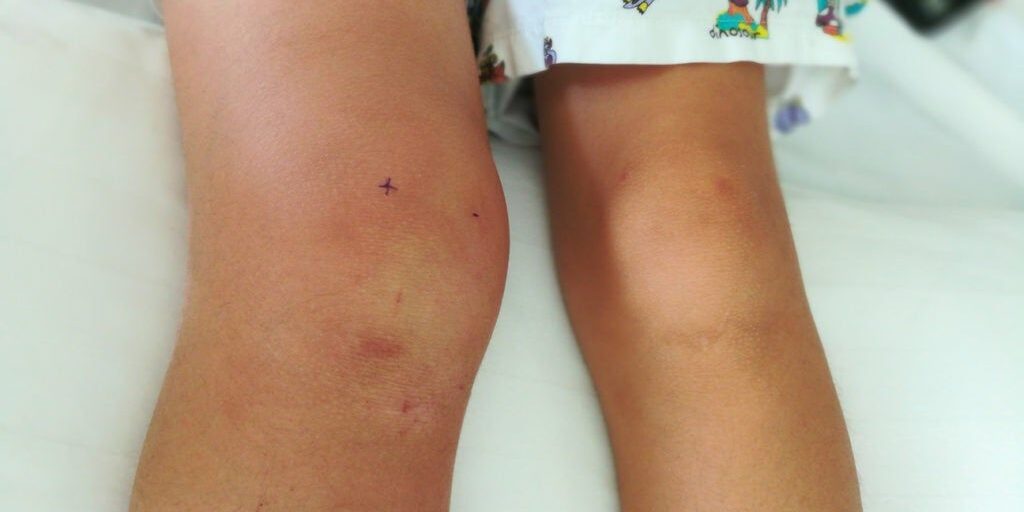
A knee can swell up without any fall, twist, or obvious accident. If you noticed puffiness, tightness, or stiffness in your knee and can’t trace it back to a specific injury, you’re not alone. This kind of swelling usually points to something happening inside the joint rather than a bruise from the outside.
The good news: many causes are manageable once you understand what’s driving the swelling. Some are mild and settle on their own, while others need professional attention. If your symptoms are persistent or painful, seeking timely knee pain treatment helps you find the real cause and avoid complications.
This guide explains why a swollen knee without injury happens, the warning signs to watch for, and how doctors diagnose and treat it.
What Does a Swollen Knee Without Injury Mean?
A swollen knee without injury means fluid or inflammation has built up in or around the joint without any external trauma. The medical term for extra fluid inside the joint is knee effusion — sometimes called “water on the knee.”
Your knee joint naturally holds a small amount of fluid that keeps it moving smoothly. When something irritates the joint, your body produces more of this fluid as a protective response. That extra fluid in the knee causes the visible puffiness, tightness, and pressure you feel.
Swelling can appear without an injury for a few reasons:
- An underlying joint condition, such as arthritis
- A buildup of crystals inside the joint, as with gout
- Inflammation of the soft tissue around the knee
- An infection inside the joint
Because the causes vary widely, the same symptom can mean very different things from one person to the next.
Common Causes of a Swollen Knee Without Injury
Several conditions can cause knee swelling without injury. Here are the most common ones.
Osteoarthritis
Osteoarthritis is a “wear and tear” form of arthritis where joint cartilage breaks down over time. As cartilage thins, the joint becomes irritated and produces extra fluid, leading to swelling and stiffness that often worsens with activity.
Rheumatoid Arthritis
Rheumatoid arthritis is an autoimmune condition where the immune system attacks the lining of the joints. This inflammatory arthritis often causes knee pain and swelling in both knees, along with morning stiffness and fatigue.
Gout
Gout is a form of arthritis caused by uric acid crystals collecting in a joint. It usually strikes suddenly, often overnight, producing intense pain, swelling, warmth, and redness. While gout commonly affects the big toe, it can affect the knee too.
Pseudogout
Pseudogout is similar to gout but caused by calcium crystals rather than uric acid. It can trigger sudden knee swelling, pain, and warmth, and it becomes more common with age.
Bursitis
Bursitis is inflammation of a bursa — a small fluid-filled sac that cushions the knee joint. Kneeling for long periods or repetitive pressure can inflame these sacs, causing swelling on the front or side of the knee.
Septic Arthritis (Knee Infection)
Septic arthritis is a joint infection, and it is the most urgent cause on this list. Bacteria can enter the joint and cause rapid swelling, severe pain, warmth, redness, and fever. A knee infection is a medical emergency and needs immediate care.
Overuse or Repetitive Activity
Repetitive movements can irritate the knee joint and lead to swelling. Activities like running, climbing stairs, or squatting over and over can inflame the joint even without a single injury event.
Baker’s Cyst
A Baker’s cyst is a fluid-filled lump behind the knee. It often forms when an underlying problem, such as arthritis, causes excess fluid that collects and bulges at the back of the knee, creating tightness and swelling.
If you’re unsure which of these fits your situation, that’s exactly why a professional exam matters.
Symptoms That May Occur With Knee Swelling
Knee swelling rarely shows up alone. Depending on the cause, you may also notice:
- Pain ranging from a dull ache to sharp discomfort
- Stiffness that limits how far you can bend or straighten the knee
- Warmth when you touch the joint
- Redness over the skin
- Difficulty bending or straightening the knee fully
- Tightness or pressure from the fluid buildup
- Difficulty bearing weight or walking normally
Tracking which symptoms appear together — and how quickly — gives your doctor valuable clues about the cause.
Can a Swollen Knee Without Injury Be Serious?
A swollen knee without injury may or may not be serious — it depends entirely on the underlying cause. Many cases stem from manageable conditions like mild osteoarthritis or minor bursitis that respond well to rest and care.
Other causes need prompt attention. A knee infection (septic arthritis) can damage the joint quickly and spread if left untreated. Sudden, severe swelling from gout or pseudogout can also be very painful and warrants evaluation.
The takeaway is simple: swelling itself isn’t always alarming, but certain warning signs should never be ignored.
When Should You See a Doctor?
See a doctor promptly if your swollen knee comes with warning signs of a serious problem. Seek urgent or emergency medical care if you notice:
- A knee that becomes hot, red, or discolored
- Severe or rapidly worsening swelling
- Fever along with knee swelling
- Inability to move the knee or bear weight
- Intense pain that doesn’t ease with rest
A warm, discolored knee — especially with fever — can signal an infection and needs immediate medical attention. You should also see a doctor for swelling that lasts more than a few days, keeps coming back, or has no clear explanation.
When in doubt, get it checked. Early evaluation prevents small problems from becoming bigger ones.
How Is a Swollen Knee Without Injury Diagnosed?
Doctors diagnose a swollen knee using a combination of history, examination, and testing. The goal is to identify the exact cause so treatment targets the real problem.
Your clinician may use:
- Medical history — Reviewing your symptoms, health conditions, medications, and when the swelling started.
- Physical examination — Checking the knee for warmth, redness, tenderness, range of motion, and fluid.
- X-rays — Imaging that shows bone changes, arthritis, or joint narrowing.
- Ultrasound — A scan that detects fluid in the knee and inflammation in soft tissues.
- MRI — Detailed imaging used when soft tissue, cartilage, or deeper problems need a closer look.
- Joint aspiration (arthrocentesis) — A procedure that removes fluid from the joint with a needle so it can be analyzed for infection, blood, or crystals linked to gout or pseudogout.
Joint aspiration is especially useful because the fluid itself often reveals the diagnosis.
Treatment for a Swollen Knee Without Injury
Treatment for a swollen knee depends on the underlying cause. There is no single fix, which is why an accurate diagnosis comes first.
For mild swelling with no warning signs, conservative measures often help:
- Rest the knee and avoid activities that make it worse
- Ice the joint to reduce swelling and discomfort
- Elevate the leg to help fluid drain away
- Modify activity by switching to gentler movement while it heals
For specific conditions, a doctor may recommend targeted swollen knee treatment. Arthritis, gout, pseudogout, and infections each call for different approaches, and some may require medication or a procedure to drain fluid. A knee infection needs urgent treatment.
Never assume the cause on your own. Persistent, painful, or unexplained swelling should always be assessed by a qualified healthcare professional so you get the right treatment.
How to Help Prevent Recurring Knee Swelling
You can lower your risk of repeated knee swelling with a few practical habits:
- Stay active at a healthy level to keep your joints moving without overloading them.
- Strengthen supporting muscles in your thighs and hips to stabilize the knee.
- Choose low-impact activities like swimming, cycling, or walking over high-impact ones.
- Maintain a healthy weight to reduce stress on the joints.
- Manage underlying conditions such as arthritis or gout with ongoing care.
Consistent, joint-friendly habits protect your knees over the long term.
Take the Next Step Toward Answers
If your knee swelling is persistent, painful, unexplained, or getting worse, don’t wait it out. A qualified healthcare provider can pinpoint the cause and guide you toward the right treatment before the problem grows. Book an evaluation with an orthopedic specialist to get clear answers and a plan tailored to your knee.
Frequently Asked Questions
Why is my knee swollen if I did not injure it?
Your knee can swell without injury when fluid or inflammation builds up inside the joint. Common causes include arthritis, gout, pseudogout, bursitis, overuse, or infection. Because the reasons vary, a medical exam is the best way to find the exact cause.
Can arthritis cause a swollen knee?
Yes. Both osteoarthritis and rheumatoid arthritis are common causes of a swollen knee. They irritate the joint, which produces extra fluid and leads to swelling, stiffness, and pain, often without any injury.
Can gout cause knee swelling?
Yes. Gout occurs when uric acid crystals collect in the joint, causing sudden, intense swelling, pain, warmth, and redness. While gout often affects the big toe, it can also strike the knee.
How do I reduce swelling in my knee?
Rest the knee, apply ice, elevate the leg, and avoid activities that worsen it. These steps help mild swelling, but persistent or painful swelling should be evaluated by a doctor to treat the underlying cause.
How long should a swollen knee last?
Mild swelling may ease within a few days of rest and care. Swelling that lasts more than a week, keeps returning, or comes with pain, warmth, or fever should be checked by a healthcare professional.
When should I worry about a swollen knee?
Worry if the knee becomes hot, red, or severely painful, if you have a fever, or if you can’t move or bear weight. These signs can indicate infection or another serious problem and need prompt medical attention.
Can a swollen knee go away on its own?
Sometimes. Mild swelling from minor overuse may resolve with rest and ice. Swelling caused by arthritis, gout, infection, or other conditions usually needs treatment, so unexplained or lasting swelling should be evaluated.