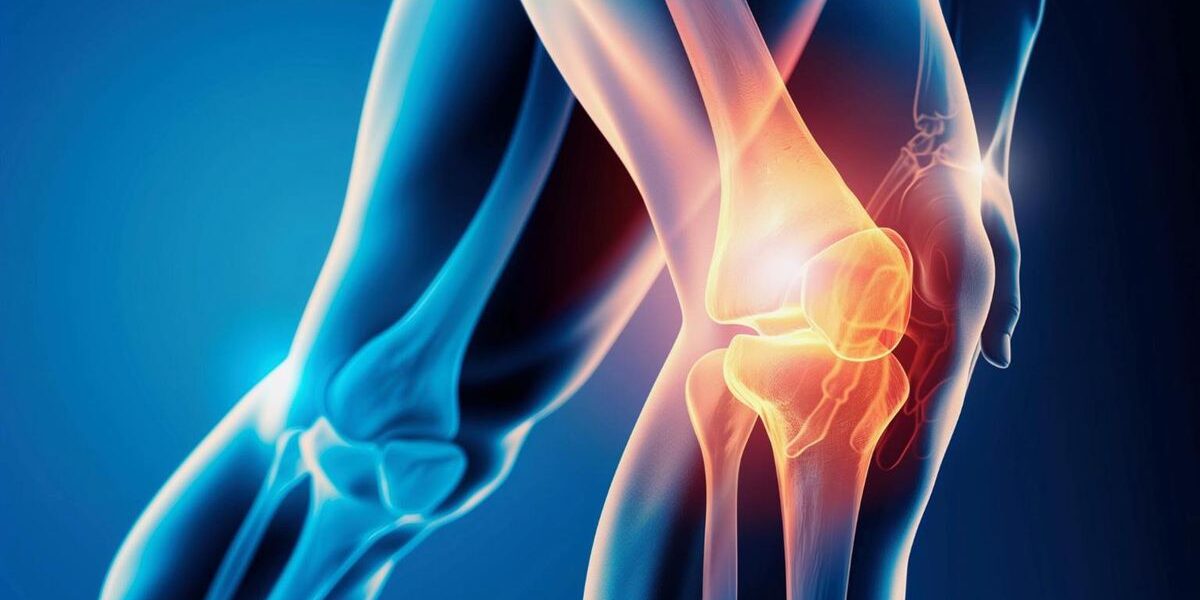
An unstable knee is a knee that feels like it cannot fully support your body weight. You might notice your knee “giving way,” buckling under you, or slipping when you stand, walk, or change direction. That sensation of not being able to trust your leg is what most people mean when they say their knee feels unstable.
Knee instability is a symptom, not a single diagnosis. It can come from several different problems inside or around the joint, and the right response depends on what’s actually causing it. Because the knee relies on ligaments, cartilage, muscles, and bones all working together, one weak link can throw off the whole system.
This guide explains what an unstable knee feels like, what commonly causes it, and how it’s evaluated and treated. If your symptoms are persistent or follow an injury, a professional evaluation—such as the kind offered through specialized orthopedic knee care—can help identify the underlying cause. Nothing here replaces a personal medical assessment.
What Is an Unstable Knee?
An unstable knee is a joint that doesn’t feel secure during movement or weight-bearing. The knee should stay aligned as you bend, straighten, and pivot. When something disrupts that control, the joint may shift, wobble, or collapse.
There are two broad types worth separating:
- General knee instability involves the whole joint feeling loose or unreliable. It’s often linked to ligament or cartilage problems that affect how the bones move against each other.
- Patellar instability involves the kneecap (patella) specifically. Here, the kneecap slips out of its normal groove—partially (subluxation) or fully (dislocation). An unstable kneecap can cause a distinct feeling of the front of the knee giving out.
Knowing which type you’re dealing with matters, because the causes and treatments differ.
What Does an Unstable Knee Feel Like?
An unstable knee usually announces itself through specific sensations rather than steady pain alone. Recognizing these patterns helps you describe them accurately to a clinician.
Common symptoms of knee instability include:
- Giving way: The knee suddenly loses support, as if it might drop you.
- Buckling: The joint bends or folds unexpectedly, often mid-step.
- Feeling unable to bear weight: You hesitate to trust the leg on stairs or uneven ground.
- Shifting or slipping: A sense that bones are moving out of place.
- Popping or catching: A click, snap, or a moment where the knee seems to lock.
Pain, swelling, and stiffness may accompany these sensations—or they may not. Some people feel instability without much pain at all, which is one reason the symptom shouldn’t be ignored just because it doesn’t hurt.
What Causes an Unstable Knee?
An unstable knee can stem from several different conditions, and similar symptoms can point to very different problems. That’s why guessing the cause on your own is unreliable.
The most common causes include:
- Ligament injuries. A knee ligament injury—especially an ACL injury (anterior cruciate ligament)—is a leading source of instability. The ACL helps control forward movement and rotation, so a tear often produces a distinct giving-way sensation during pivoting.
- Meniscus injuries. A meniscus tear damages the cartilage cushion between your thigh and shin bones. A torn fragment can catch in the joint and trigger locking or buckling.
- Patellar instability. A kneecap dislocation or subluxation leaves the patella prone to slipping again, creating repeated front-of-knee instability.
- Muscle weakness. Weak quadriceps, hamstrings, or hip muscles reduce the active support the joint needs, allowing the knee to feel loose.
- Arthritis and degenerative changes. Worn cartilage and joint surface changes can alter how the knee moves and feels over time.
- Previous knee injuries. Old ligament, cartilage, or kneecap injuries can leave lasting instability if they didn’t fully heal or rehabilitate.
- Alignment or structural factors. Differences in bone shape, a shallow kneecap groove, or leg alignment can make some knees more prone to instability.
Because these causes overlap in how they feel, a clinical exam is often needed to tell them apart.
Can an Unstable Knee Happen Without an Injury?
Yes—an unstable knee can develop without any single traumatic event. Many people expect instability to follow a dramatic fall or sports collision, but that isn’t always the case.
Instability that builds gradually is often tied to:
- Muscle weakness or imbalance, which reduces the joint’s active support.
- Degenerative changes from aging or wear that alter joint mechanics.
- Patellar tracking problems, where the kneecap doesn’t glide smoothly in its groove.
- Other underlying knee conditions that affect cartilage or joint surfaces.
When instability appears without a clear injury, it’s still worth evaluating. A gradual onset can point to a treatable cause like weakness or tracking issues.
When Is an Unstable Knee a Serious Problem?
An unstable knee becomes a priority when it appears alongside signs of significant injury or joint damage. Some symptoms warrant prompt medical evaluation rather than watchful waiting.
Seek care promptly if you notice any of the following:
- You cannot bear weight on the leg.
- Swelling is severe or increases rapidly.
- Pain is significant, especially after an injury.
- Your kneecap or joint looks visibly out of place.
- You cannot fully straighten or bend the knee.
- The knee gives way repeatedly.
- The joint locks, catches, or feels stuck.
- Symptoms follow a major twist, fall, or sports injury.
These signs don’t confirm a specific diagnosis, but they suggest the knee needs professional attention soon.
How Is Knee Instability Diagnosed?
Knee instability is diagnosed through a combination of your history, a physical exam, and—when needed—imaging. No single test explains every case, so clinicians build a picture from several sources.
A typical evaluation may include:
- Reviewing your medical history, including how and when symptoms started and any past injuries.
- Performing a physical examination to check swelling, tenderness, and joint movement.
- Testing range of motion and stability with hands-on maneuvers that assess specific ligaments and the kneecap.
- Ordering X-rays when appropriate, mainly to look at bones and alignment.
- Using MRI or other imaging when clinically indicated, which can show ligaments, cartilage, and the meniscus in detail.
This step-by-step approach helps distinguish an ACL injury from a meniscus tear, patellar instability, or another cause.
How Is an Unstable Knee Treated?
Treatment for an unstable knee depends entirely on the underlying cause. Two people with the same buckling sensation may need very different care.
Common approaches include:
- Activity modification, adjusting movements that trigger giving way.
- Rest and symptom management, giving irritated tissues time to settle.
- Physical therapy, guided rehabilitation to restore strength and control.
- Strengthening and mobility work, targeting the muscles that support the joint.
- Knee bracing when recommended, adding external support during recovery or activity.
- Treating the underlying condition, such as addressing a torn ligament, damaged meniscus, or recurrent kneecap dislocation.
- Surgery for selected cases, including some ligament tears or repeated instability that doesn’t respond to conservative care.
The right plan comes from a clinician who has examined your knee, not from a generic checklist.
Exercises for Knee Stability
Exercises can play an important role in knee stability, but they should fit your specific condition. Strengthening the muscles around the knee and hip often improves how well the joint supports you—when done correctly and at the right time.
Professionally guided rehabilitation typically focuses on:
- Quadriceps and hamstring strength, to steady the joint through its range.
- Hip and glute conditioning, which influences how the knee tracks during movement.
- Balance and control drills, to retrain the joint’s response to sudden shifts.
Exercises are not a universal fix. The wrong movement at the wrong stage can aggravate an injury, so it’s best to progress under guidance from a qualified professional.
How to Prevent Knee Instability
You can lower your risk of knee instability by supporting the joint before problems start. Prevention centers on strength, technique, and sensible progression.
Practical steps include:
- Build lower-body and hip strength through consistent, balanced training.
- Warm up before activity to prepare muscles and joints.
- Practice safe movement technique when landing, cutting, or pivoting.
- Increase activity gradually rather than spiking intensity suddenly.
- Rehabilitate injuries fully before returning to sport or heavy activity.
These habits won’t guarantee a stable knee, but they meaningfully reduce common risks.
Frequently Asked Questions
Why does my knee feel unstable?
A knee can feel unstable due to ligament injuries, a meniscus tear, patellar instability, muscle weakness, arthritis, or other conditions. Because causes overlap, an exam is the reliable way to know.
Can a weak knee become stable again?
Often, yes. When weakness or muscle imbalance is the cause, targeted, professionally guided strengthening can improve stability over time.
Can an unstable knee heal on its own?
Some minor cases improve with rest and rehabilitation. Others, such as certain ligament or cartilage injuries, may need specific treatment to resolve.
Should I walk on an unstable knee?
If your knee gives way, is very painful, or can’t bear weight, avoid pushing through it and seek evaluation. Repeated buckling can risk further injury.
When should I see a doctor for knee instability?
See a doctor for an unstable knee if symptoms are persistent, recurrent, painful, follow an injury, or come with severe swelling or an inability to bear weight.
Does an unstable knee always mean an ACL tear?
No. An ACL injury is one common cause, but instability can also come from the meniscus, kneecap, muscles, arthritis, or other factors.
Conclusion
An unstable knee—one that gives way, buckles, or feels unable to hold you—is a symptom with many possible causes, from an ACL injury or meniscus tear to patellar instability, muscle weakness, or arthritis. Similar sensations can come from very different problems, which is why an accurate diagnosis usually depends on a physical exam and, when appropriate, imaging.
If your knee instability is persistent, recurrent, painful, or linked to an injury—or if you’re dealing with significant swelling or trouble walking—consider scheduling an evaluation with a qualified healthcare professional. A proper assessment is the most reliable step toward relief and a confident return to the activities you value.