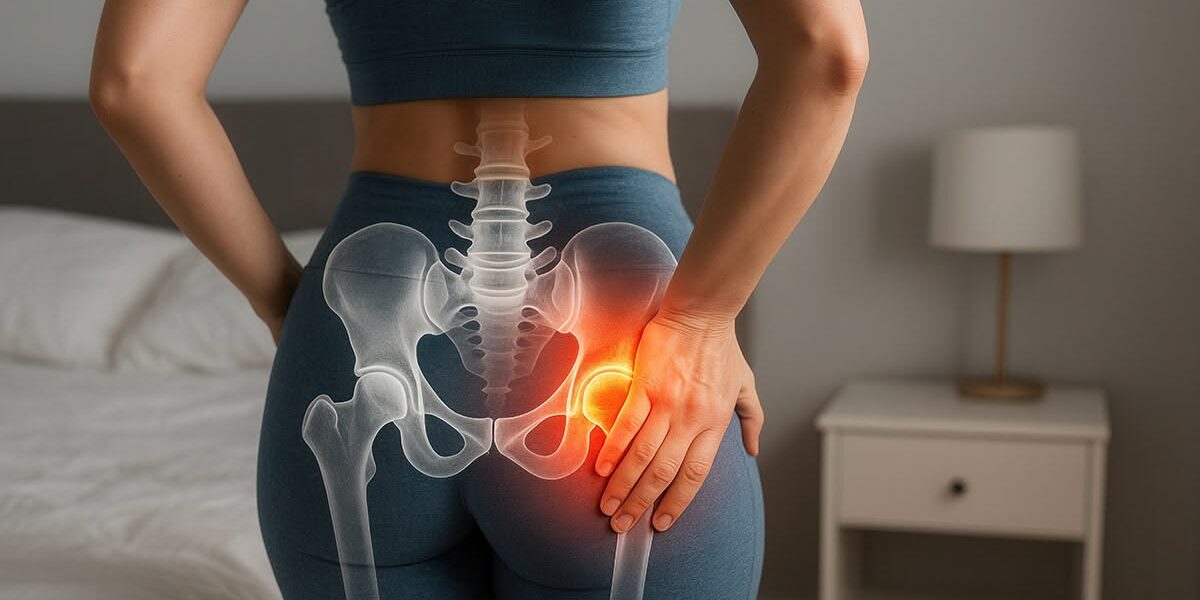
Hip pain is one of the most common joint complaints, affecting people of every age and activity level. It can show up as a dull ache after a long walk, a sharp catch when you stand from a chair, or a deep soreness that keeps you awake at night. The location, severity, and timing of your discomfort all offer clues about what’s happening.
Those clues matter because hip pain doesn’t always come from the hip joint itself. Sometimes the source is a muscle, a tendon, or even your lower back. Understanding the difference helps you decide whether to rest and monitor at home or seek a professional evaluation.
This guide explains the causes, symptoms, and treatment of hip pain in plain language. If your symptoms are persistent or worsening, a consultation with an experienced orthopaedic specialist can help pinpoint the cause and guide the right next step. The information here is educational and not a substitute for medical advice.
What Is Hip Pain?
Hip pain is any discomfort felt in or around the hip joint — the ball-and-socket joint where your thigh bone meets your pelvis. That definition sounds simple, but the pain rarely stays neatly over the joint.
You may feel it in the groin, along the outer hip, deep in the buttock, down the front of the thigh, or even radiating toward the knee. This spread happens because the hip shares nerves and tissues with nearby regions, so problems in one area can be felt in another. Pain that seems to live in your hip might actually start in your spine, and vice versa.
What Causes Hip Pain?
Hip pain has many possible causes, ranging from everyday wear to less common but serious conditions. Most cases trace back to the joint, the soft tissues around it, or referred pain from the lower back.
Osteoarthritis is the most frequent cause of long-term hip pain, especially in older adults. This is the gradual breakdown of cartilage — the smooth cushion covering the ends of bones — which leads to stiffness and aching that worsens with activity.
Hip bursitis is inflammation of a bursa, a small fluid-filled sac that reduces friction near the joint. It typically causes pain over the outer hip that flares when you lie on that side.
Muscle and tendon strains happen when soft tissues are overstretched or overloaded, often after exercise or a sudden movement. Closely related is tendinitis — irritation of a tendon, the cord connecting muscle to bone — which produces pain that builds with repeated use.
Labral tears involve the labrum, the ring of cartilage that seals and stabilizes the hip socket. A torn labrum can cause catching, clicking, or a deep groin ache.
Hip impingement (femoroacetabular impingement) occurs when the bones of the hip are shaped so they rub abnormally, which over time can damage cartilage and the labrum.
Sports and overuse injuries are common in active people, from runners to weekend athletes, and often overlap with strains and tendinitis.
Hip fractures are a serious cause, most often affecting older adults after a fall or those with weakened bones. A fracture usually brings sudden, severe pain and difficulty bearing weight.
Rheumatoid and other inflammatory arthritis are autoimmune conditions in which the body’s immune system attacks the joints, causing swelling, warmth, and stiffness that is often worse in the morning.
Nerve-related pain can travel to the hip when a nerve is compressed or irritated, sometimes producing burning, tingling, or numbness.
Lower-back and spine-related referred pain is a frequent culprit. Conditions like a herniated disc can send pain into the buttock and hip even when the joint itself is healthy.
Less common but serious causes include joint infection and osteonecrosis — the loss of blood supply to bone, which causes bone tissue to die. Both need prompt medical care.
Where Does Hip Pain Usually Occur?
Where you feel hip pain offers a valuable clue about its source, though location alone cannot confirm a diagnosis. Here’s how the common patterns tend to differ:
- Front or groin pain often points to the hip joint itself, such as osteoarthritis, a labral tear, or impingement.
- Outer hip pain is frequently linked to bursitis or tendon problems in the surrounding soft tissue.
- Buttock pain can arise from the hip, but it commonly signals a lower-back or spine issue.
- Upper-thigh pain may come from the joint or nearby muscles and tendons.
- Pain that radiates toward the knee or lower back suggests referred pain, where the true source sits elsewhere.
Use these patterns as a starting point for describing your symptoms to a clinician — not as a self-diagnosis.
Common Symptoms That Can Occur With Hip Pain
Hip pain rarely travels alone. The symptoms that accompany it help explain what’s going on and how much it’s affecting your daily life.
Watch for the following:
- Stiffness, especially after resting or first thing in the morning
- Reduced range of motion, such as trouble bending or rotating the leg
- Pain while walking
- Pain when climbing stairs
- Difficulty getting up from a chair
- Pain when lying on the affected side at night
- Limping or a change in your walking pattern
- Weakness in the leg
- Swelling, warmth, or tenderness in some cases
Note which activities trigger your pain and how long each episode lasts. That record gives a healthcare professional useful detail during your visit.
How Is Hip Pain Diagnosed?
Diagnosing hip pain starts with a conversation and a hands-on exam, not immediately with scans. A clinician builds the picture step by step:
- Review your medical history, including when the pain began, what makes it better or worse, and any past injuries.
- Perform a physical examination to check for tenderness, swelling, and areas that reproduce your pain.
- Assess your range of motion to see which movements are limited or painful.
- Evaluate your gait by watching you walk for signs of a limp or imbalance.
- Order imaging when appropriate — X-rays can reveal arthritis or fractures, while an MRI shows soft tissues like the labrum, tendons, and cartilage.
- Add further testing when needed, such as blood work or specialized studies, if infection, nerve problems, or inflammatory arthritis is suspected.
Because hip and lower-back conditions can produce overlapping symptoms, a thorough evaluation is essential to identify the true source. That distinction shapes the entire treatment plan.
How Is Hip Pain Treated?
Hip pain treatment depends on the underlying cause and how severe your symptoms are. Most people start with conservative, non-surgical care and improve without an operation.
Common first-line approaches include:
- Activity modification — adjusting movements that aggravate the pain
- Rest from the specific activities causing flare-ups
- Physical therapy to strengthen supporting muscles and restore motion
- Appropriate exercise, such as low-impact activity that keeps the joint mobile
- Weight management where relevant, since extra weight adds load to the hip
- Ice or heat applied to ease pain and stiffness
- Non-prescription pain relievers when medically appropriate
Talk with a healthcare professional before starting any pain medication. Over-the-counter options are not safe for everyone, and the right choice depends on your health history and other medicines you take.
When conservative care isn’t enough, further options exist. Injections can reduce inflammation in certain conditions, and surgery may be considered for specific diagnoses. For hip osteoarthritis, evidence-based care can include physical therapy, exercise, activity modification, medications, and selected injections — with a procedure such as hip replacement reserved for appropriate patients who have significant symptoms and haven’t improved with non-surgical treatment.
The right plan is the one matched to your specific diagnosis by a qualified clinician.
When Should You See a Doctor for Hip Pain?
See a doctor when hip pain persists, worsens, or interferes with daily life. Occasional soreness after activity often settles on its own, but certain signs warrant a professional evaluation.
Schedule an appointment if you notice any of these:
- Pain that lingers or keeps coming back
- Pain that interferes with walking or everyday tasks
- Pain that is getting worse over time
- Significant stiffness or loss of movement
- Symptoms that started after an injury
- Pain at night or discomfort you can’t explain
- Swelling, redness, or fever alongside hip pain
- Trouble putting weight on the leg
Some situations need urgent medical attention. Seek immediate care for severe pain after an injury, an inability to bear weight, a visibly deformed hip or leg, sudden swelling, or a fever combined with significant hip symptoms. These can point to a fracture, infection, or another condition that shouldn’t wait.
Frequently Asked Questions About Hip Pain
What is the most common cause of hip pain?
Osteoarthritis is the most common cause of long-term hip pain, particularly in older adults. It develops as the cartilage cushioning the joint gradually wears down, leading to aching, stiffness, and reduced movement. In younger and active people, muscle strains, tendinitis, and overuse injuries are more frequent sources.
How do I know if my hip pain is serious?
Hip pain may be serious if it’s severe, follows an injury, prevents you from bearing weight, or comes with swelling, redness, or fever. Pain that keeps worsening, wakes you at night, or limits daily activities also deserves prompt evaluation. When in doubt, have a healthcare professional assess it.
Can hip pain come from the lower back?
Yes. Lower-back and spine conditions, such as a herniated disc or a pinched nerve, can refer pain into the buttock, hip, and thigh. This is why hip and back problems are sometimes mistaken for one another. A proper exam helps identify the true source and guide treatment.
What does arthritis hip pain feel like?
Hip arthritis typically causes a deep ache in the groin or front of the hip, along with stiffness that’s often worst in the morning or after resting. Pain tends to increase with walking and activity. Many people also notice a gradual loss of motion and occasional grinding sensations.
Can hip pain go away on its own?
Mild hip pain from a minor strain or overuse often improves within days to weeks with rest, gentle movement, and self-care. Pain that persists beyond a couple of weeks, returns repeatedly, or worsens is less likely to resolve alone and should be evaluated by a professional.
What can I do at home for mild hip pain?
For mild hip pain, rest from aggravating activities, apply ice or heat, and try gentle stretching or low-impact movement. Maintaining a healthy weight reduces stress on the joint. Non-prescription pain relievers may help, but check with a healthcare professional first to confirm they’re right for you.
Take the Next Step Toward Relief
Hip pain that lingers, worsens, or disrupts your daily routine deserves a clear answer — not guesswork. A qualified orthopaedic professional can evaluate your symptoms, identify whether the source is your hip, surrounding tissues, or your spine, and build a treatment plan suited to you. If your discomfort is persistent or concerning, reach out to schedule an evaluation and get expert guidance on your path to lasting relief.