A torn meniscus often causes knee pain, swelling, stiffness, clicking, catching, or locking, along with trouble fully bending or straightening the knee. These symptoms frequently appear after a twist, a pivot, a deep squat, or a direct blow to the knee. But here’s the important part: symptoms alone cannot confirm a meniscus tear. Ligament injuries, cartilage problems, and arthritis can feel remarkably similar. A proper diagnosis usually involves a medical history, a physical examination, and imaging when appropriate.
This article walks you through how a tear might feel, what causes it, how doctors diagnose it, and what treatment can look like. Consider this general education, not a diagnosis of your specific knee.
What Is a Meniscus?
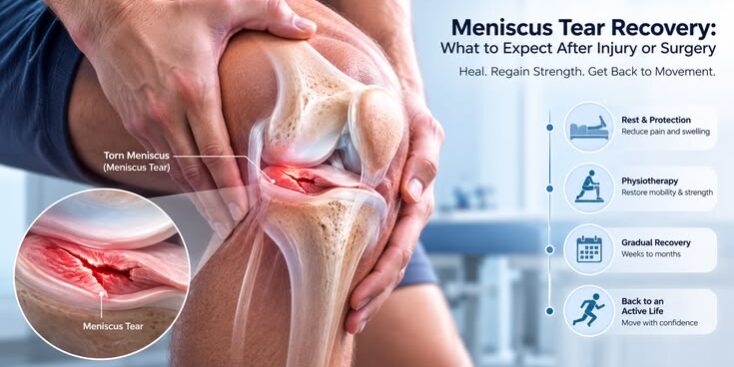
The meniscus is a piece of cartilage in your knee. Each knee actually has two of them, sitting between the thighbone (femur) and the shinbone (tibia).
Think of them as cushions. They help spread out the forces that travel through your knee every time you walk, run, or climb stairs. They also add stability, keeping the joint working smoothly. When one of these cushions tears, the knee may not absorb load or move quite the same way.
How Do I Know If I Tore My Meniscus?
You may suspect a meniscus tear when knee symptoms begin after a specific movement or injury. A tear is often linked to:
- Twisting or pivoting
- Squatting or kneeling
- Sports activity
- An awkward step or landing
- Direct trauma to the knee
Not every meniscus injury follows a dramatic moment, though. Degenerative meniscus tears can develop as the tissue changes with age, and these sometimes happen during ordinary movements like standing up from a low chair.
Symptoms also vary widely from person to person. Some people feel intense pain right away, while others notice only mild discomfort that lingers. Because of this variation, the way to truly confirm a tear is through a professional assessment rather than guesswork.
What Are the Symptoms of a Torn Meniscus?
Torn meniscus symptoms cover a range of sensations. Here are the ones people notice most often.
Knee pain. Pain may center around the knee joint and often becomes more noticeable with certain movements, such as bending or twisting.
Knee swelling. Swelling can develop after an injury, sometimes gradually over a day or two. Still, not every meniscus tear causes obvious swelling.
Knee stiffness. Inflammation and irritation inside the joint can make the knee feel tight or stiff, especially after resting.
Clicking or popping. Some people notice a clicking or popping sound during movement. These mechanical sensations are common but not specific to a torn meniscus.
Catching or locking. Catching feels like the knee briefly hangs up during motion. Knee locking is different and more concerning: the joint may become genuinely stuck, making it hard to fully bend or straighten. That deserves medical evaluation.
Pain when twisting or bending the knee. Squatting, kneeling, pivoting, and deep knee bending can aggravate the joint and trigger pain.
Keep in mind that no single one of these signs of a torn meniscus proves a diagnosis on its own.
What Does a Torn Meniscus Feel Like?
From a patient’s point of view, a meniscus injury often shows up during everyday activities. You might feel pain or discomfort while:
- Squatting or kneeling
- Going up or down stairs
- Getting up from a chair
- Twisting or pivoting
- Bending the knee deeply
The experience isn’t the same for everyone. Some people have mild symptoms they can push through, while others deal with significant pain or mechanical problems like catching. The location, size, and pattern of the tear all influence how it feels. Other injuries, such as ligament or cartilage damage, may occur at the same time and shape your symptoms too.
Can You Walk With a Torn Meniscus?
Yes, some people can walk with a torn meniscus. Being able to walk does not rule out a meniscus injury.
One person might walk almost normally, while another struggles with knee pain, swelling, stiffness, or difficulty bearing weight. It really depends on the tear and how the knee responds.
That said, repeated locking, significant pain, a feeling of instability, or symptoms that keep getting worse should be checked by a professional. Try not to repeatedly test an injured knee to see how much it can handle, since that may aggravate the problem.
What Causes a Meniscus Tear?
Meniscus tears generally fall into two categories.
Acute meniscus tears happen from a sudden event. Common causes include:
- Sudden twisting or pivoting
- Rapid changes in direction
- Awkward landings
- Sports collisions or moves
- Direct trauma
Degenerative meniscus tears develop differently. As the knee ages, meniscal tissue can become less resilient. A tear may then occur with a relatively minor movement rather than a big injury.
So a meniscus injury doesn’t always trace back to a memorable accident. Sometimes it builds quietly over time.
How Is a Torn Meniscus Diagnosed?
Meniscus tear diagnosis usually starts with a conversation and a hands-on exam, then adds imaging when needed.
Your clinician will likely ask about your medical history and how the injury occurred. Understanding the mechanism, like a twist during sports, offers valuable clues.
Next comes the physical examination, which may include checking for:
- Tenderness along the joint line
- Range of motion
- Meniscus-specific physical tests
- Signs of other knee injuries, such as ligament involvement
Imaging can confirm or clarify the picture. X-rays primarily show bones, so they don’t directly reveal the meniscus. Instead, they help identify fractures, arthritis, or other causes of knee pain. An MRI for a meniscus tear provides detailed images of soft tissues and can help identify tears and associated injuries.
Not everyone with knee pain needs an MRI, though. The decision depends on your symptoms, exam findings, and clinical judgment. A thorough knee injury evaluation can help determine the right next step for your situation.
When Should You See a Doctor?
Medical evaluation makes sense when knee symptoms persist after an injury or interfere with your normal activities. Consider seeing a professional if you experience:
- Persistent knee pain
- Significant swelling
- Difficulty bearing weight
- Inability to fully bend or straighten the knee
- Repeated catching or locking
- Persistent stiffness
- A sense of knee instability
- Symptoms that worsen instead of improving
Seek prompt or urgent care for serious trauma, severe pain, major swelling, obvious deformity, or concerning numbness or circulation changes. There’s no need to panic, but timely evaluation helps protect your knee.
Does Every Meniscus Tear Require Surgery?
No. Not every meniscus tear requires surgery.
The right treatment depends on many factors, including:
- Tear type, location, size, and pattern
- Blood supply to that part of the meniscus
- Your symptoms
- Age and activity level
- Overall knee health and any arthritis
- Associated injuries
- How well the knee responds to conservative treatment
Some people improve with non-surgical care such as activity modification and physical therapy. For selected injuries or persistent symptoms, meniscus surgery may be considered. Surgery is not automatically the answer.
Can a Meniscus Tear Heal on Its Own?
The honest answer is: it depends. Whether a meniscus tear can heal on its own is tied largely to where the tear sits and how much blood supply reaches that region.
Areas with better blood flow have more healing potential. Other zones have limited biological healing capacity. Even so, symptoms from certain tears can improve with appropriate conservative treatment.
One caution: feeling better doesn’t always mean the meniscus has structurally healed. Symptom relief and tissue healing aren’t the same thing, which is why professional follow-up matters.
How Is a Meniscus Tear Treated?
Meniscus tear treatment falls into two broad groups. The best choice is individualized, so this is general information rather than a treatment plan.
Non-surgical treatment may include:
- Activity modification to reduce aggravating movements
- Physical therapy
- Strengthening the muscles around the knee
- Structured rehabilitation
- Appropriate pain-management strategies under professional guidance
Surgical treatment may involve:
- Meniscus repair, which stitches the torn tissue together so it can potentially heal
- Partial meniscectomy, which trims away the damaged portion
The decision depends on the tear pattern, its location, your symptoms, your individual circumstances, and how likely a repair is to succeed. There’s no one-size-fits-all option, and meniscus recovery timelines vary with the approach chosen.
Frequently Asked Questions
How do I know if I tore my meniscus?
You may have symptoms like knee pain, swelling, stiffness, clicking, catching, or locking, often after twisting or an injury. However, these signs overlap with other knee conditions and can’t confirm a tear alone. A healthcare professional can examine your knee and decide whether imaging, such as an MRI, is appropriate.
Can you walk with a torn meniscus?
Yes, many people can walk with a torn meniscus. Walking ability does not rule out an injury. Some walk nearly normally, while others have pain, swelling, or difficulty bearing weight. Persistent pain, locking, or worsening symptoms should be professionally evaluated rather than repeatedly tested at home.
What are the first signs of a meniscus tear?
Early signs often include knee pain, swelling that may build over a day or two, stiffness, and mechanical sensations like clicking or catching. Pain with twisting or deep bending is also common. No single symptom confirms a tear, so professional assessment is the reliable way to know.
Does a torn meniscus always swell?
No, a torn meniscus does not always swell. Swelling can develop after an injury, sometimes gradually, but some tears cause little or no obvious swelling. The absence of swelling doesn’t rule out a meniscus injury, which is why other symptoms and a clinical exam matter for an accurate picture.
Do I need an MRI for a torn meniscus?
Not always. An MRI can show soft tissues in detail and help identify a meniscus tear, but it isn’t required for every patient. The decision depends on your symptoms, physical exam findings, and clinical judgment. X-rays may be used first to check for fractures, arthritis, or other causes of knee pain.
Can a meniscus tear heal without surgery?
Sometimes. Healing potential depends on the tear’s location and blood supply. Areas with good blood flow may heal better, while other zones have limited healing capacity. Even without structural healing, symptoms can sometimes improve with conservative care like physical therapy. Improvement in pain doesn’t always mean the meniscus has fully healed.
How long does a meniscus tear take to heal?
Recovery varies widely. It depends on the tear type, its location, whether treatment is surgical or non-surgical, and individual factors like age and activity level. Some people improve over weeks, while others need longer, structured rehabilitation. Your care team can give a more realistic timeline based on your specific injury.
What happens if a meniscus tear is left untreated?
It varies. Some people manage well, while others experience ongoing pain, swelling, stiffness, or mechanical symptoms like catching. Persistent problems can affect daily activities and knee function over time. If symptoms continue or worsen, a professional evaluation helps determine the cause and appropriate next steps rather than leaving things to guesswork.
The Bottom Line
A meniscus tear can cause knee pain, swelling, stiffness, clicking, catching, or locking, especially after twisting or another knee injury. Some people can still walk with a torn meniscus, so walking ability doesn’t prove your knee is fine. The key takeaway is that symptoms alone cannot confirm a diagnosis, since other knee conditions feel similar.
A physical examination and appropriate imaging can help establish what’s really going on. Treatment depends on the tear and on you as an individual, and surgery is not automatically required. If your knee symptoms persist, worsen, or get in the way of daily life, seeking a professional orthopedic evaluation is a smart, calm next step.